
Interobjective
Writing as hyperobject 5

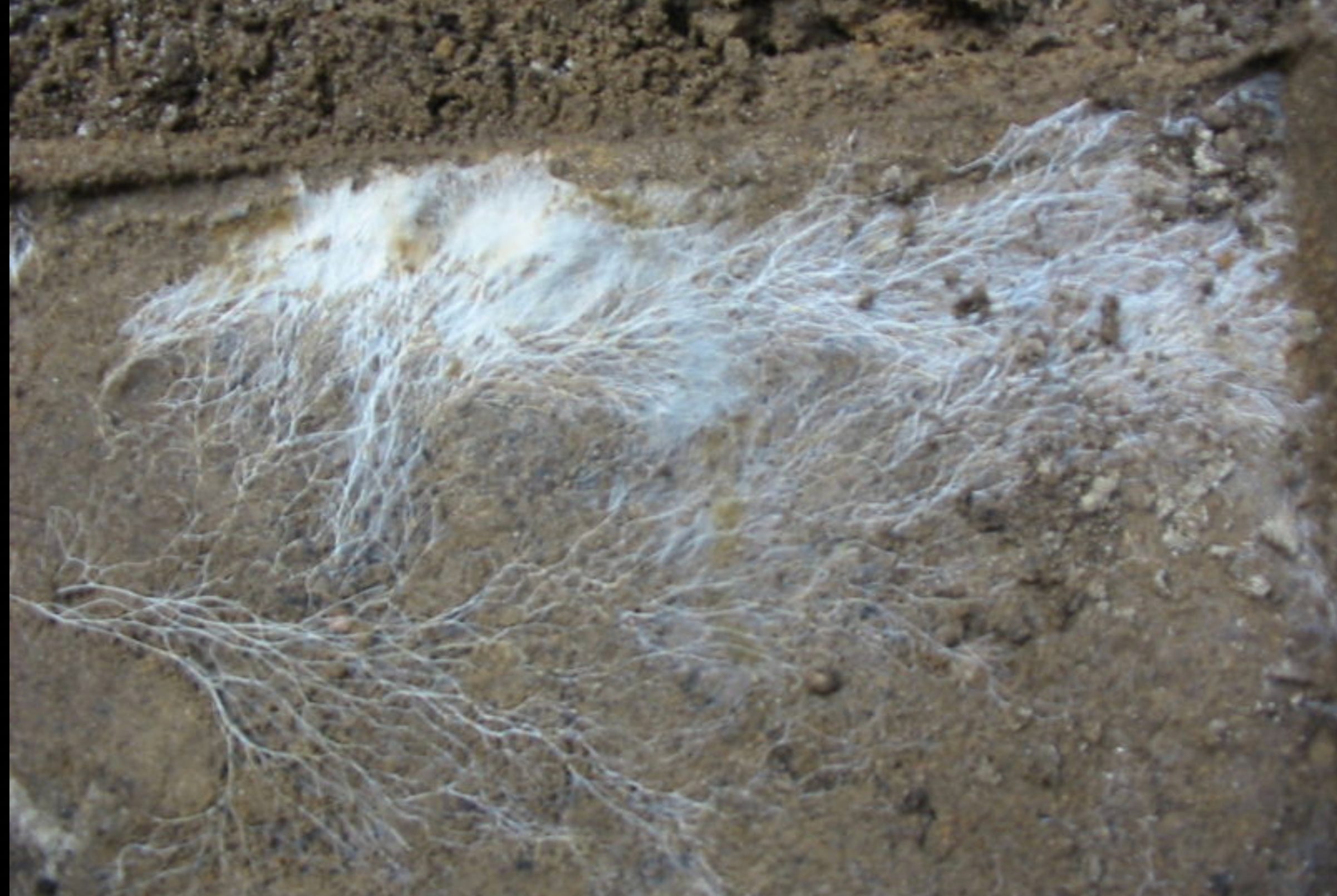
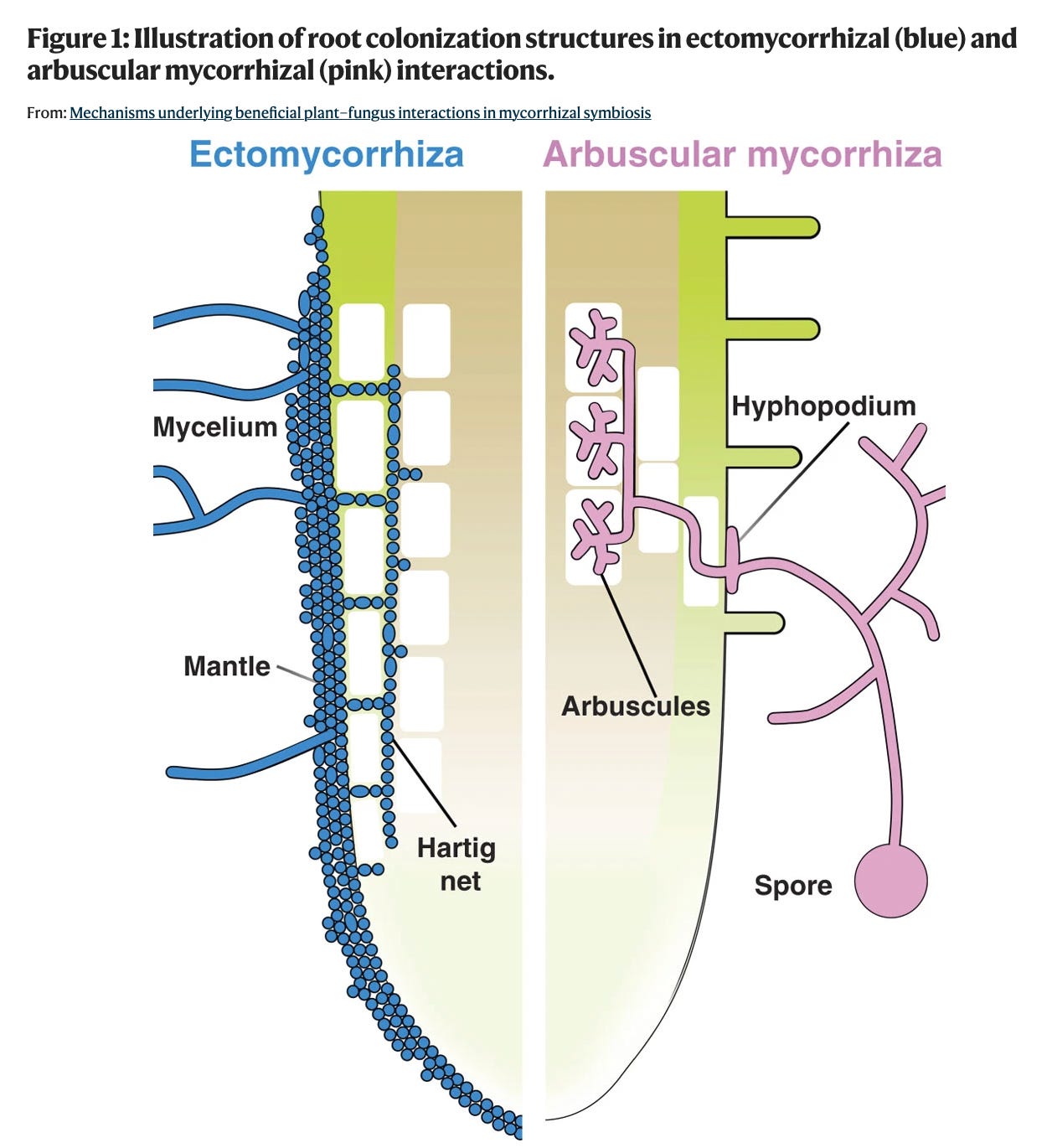
Mycelium thread there way through the ground to connect forests and meadows, sharing water, nutrients and information. Mycelium can surround the root, penetrate between the cells, or infiltrate into the cells, creating arbuscules, fractals of the tree’s structure.1 All are ways to connect, all have analogues with how poems talk to each other.
Word cells are smaller than words. Elements of sound, mouth shape and breath, and meaning. They are shared across languages, shared by people who talk to each other and take the time, or make the space, to listen.
Sharing across time expands our temporal bandwidth.2 The range from past to future that is relevant to our present. Reading poetry from different cultures, different times can radically expand ones temporal bandwidth, until it snaps. Sometimes the goal is to have time snap, and then to live unmoored in a very large present.
Back in the 1990s I did a lot of work with hypertext. In a few cases I wrote texts where every word in the text was linked to something else. A very dense hypertext. In Stuart Kauffmann’s terms, this would have a very rugged fitness landscape.3 For a poem, the fitness landscape is the path across which meaning is experienced. In the probabilistic world of Large Language Models we are living in, hypertext seems a bit old fashioned.4 Today the text becomes a field of connected probabilities. But I still think in terms of links, links as in Renga 連歌, or in the Honkadori 本歌取り of a waka.
A text can be written in a way that shows how it is connected. One can see this in Chinese and Japanese calligraphy, traditional and in the more experimental forms of someone like Ishikawa Kyuyoh 石川九楊, where lines connect glyphs in unexpected ways that open new ways of experiencing the text.5
And then there is Celan. Learning how to read Celan is a life altering project. It even has me learning some German, a language I don’t really resonate with. Celan’s writing is ‘interobjective’ in the way it remembers other languages, especially Yiddish but also Romanian and even French, inside itself and in the way later poems rewrite earlier poems.
Bird song is interobjective in the way songbirds learn each others songs and repeat parts against rivals as they compete for territories or mates. And then there is whale song. I have a naive hope that deep temporal sequencing6 will eventually let us understand whale song.
Hyperobjects exist as patterns of effects between many objects, rather than as a single thing “over there” that we can directly encounter. We live in a vast, non-local configuration space—the “mesh”—formed by all the overlapping relations and inscriptions among objects. Hyperobjects are inhabitants of this mesh because they are constituted by, and only partially accessible through, those relations.
Sequences
Thread 1 - Tea
After washing the dishes
Cleaning the sink
Light steam
First morning
Cleaning the sink
Cracks in the porcelain
Thin grey cracks
In the old sink
Thirty years on
Fine cracks in the porcelain
Somehow cold wearing
A sweater at home after surgery
The snow of
Past winters is not
This years snow7
Rain sodden snow
Slumps off the cedar
A moments silence
Rain melted snow
Pooling on ice a dull
Fierce grey
How many points
Are there in the line
Connecting us
Sunyata
An empty line along
The border of the possible
Not null or
Not not null is
Not null
The world of dew8
Under my feet a
Fall morning
Thread 2 - Breath
Cold fluid into
A vein hydrating
The blood
Breath vapour
Bound to lung membranes
Tight as skin
Breath mingling
On a crowded train jostled together
Sharing breath and
Rain connects us
Standing under a tree
Talking about dogs
Rain sodden snow
Slumps off the cedar
A moments silence
Temporal bandwidth
Saturates the night air
Lying in silence
There is no rain
Little wind
My adult son sleeps
Toes curled and body soft
Breathing deeply
Standing in the
Continuous space between
Light rain
Temporal bandwidth
Saturates the night air
Thread 3 - Sisters
Her sister uncertain
Which of us
Is still alive
Afraid to not know afraid
Not to know wandering
Between worlds
Yurei9
Ghosts slip out
From old photographs
The small woman
In the tiny hat
Has not come back
Like a ghost haunting
Past midnight complaining
Of the pain and loss
Happy joy watching
Her sisters children
On the phone
Gone given loss in
To other selves reflections
Infinite regress
Writing the voice
In its absence allowing
Echos to answers
At two in the morning
Cleaning the sink finding
Fine cracks in the porcelain
Thread 4 - Water
Rain sodden snow
Slumps off the cedar
A moments silence
The vague point where
Rain turns to snow
Snow to slush
Water choosing
Not choosing to
Claim a state
The water surface
Flat as oil waiting for
The first breath of air
The water empty
Of its tensions sliding
Into its surfaces
Ice changing to
Water vapour holding
Light from the surface
State transitions fluctuate
Faster than the boat can slide
Across blurred surfaces
Light particles condense
Into an even shimmering
Field of grey
Intermittent solids contain
Their own spaces percolating
And capillary action
Water medicine
Water tea tepid
Water dust
Thread 5 - Bath
First things a
Hot bath shave then
Brush teeth
Hot water the metal
Expands faster than glass
Opening peaches
Very hot water
To clean glass
Evaporating clean
At two in the morning
Bath water pale blue
With heat
Blood graph
Expanding to the surface
In the hot springs water
Dust skeins
Delicate coherence
Breath
Dust connects by
Static and small barbs
That entangle
Transfinite colour
Between any system
For reproduction10
A colour for every
Transcendental and every
Ratio over and under
Water soured
In the air lost ions
And temporal drift
Mycelial11
First morning
Cleaning the sink
Cracks in the porcelain
Thin grey cracks
In the old sink
Thirty years on
Fine cracks in the porcelain
Somehow cold wearing
A sweater at home after surgery
Cold fluid into
A vein hydrating
The blood
Breath vapour
Bound to lung membranes
Tight as skin
Breath mingling
On a crowded train jostled together
Sharing breath and
Rain connects us
Standing under a tree
Talking about dogs
Rain sodden snow
Slumps off the cedar
A moments silence
The vague point where
Rain turns to snow
Snow to slush
Snow frozen hard
The second day
Rain hissing into
Water choosing
Not choosing to
Claim a state
The water surface
Flat as oil waiting for
The first breath of air
The water empty
Of its tensions sliding
Into its surfaces
Light particles condense
Into an even shimmering
Field of grey
Sunyata
An empty line along
The border of the possible
Not null or
Not not null is
Not null
How many points
Are there in the line
Connecting us
Gone given loss in
To other selves reflections
Infinite regress
Her sister uncertain
Which of us
Is still alive
Afraid to not know afraid
Not to know wandering
Between worlds
Yurei
Ghosts slip out
From old photographs
The small woman
In the tiny hat
Has not come back
Writing the voice
In its absence allowing
Echos to answers
After washing the dishes
Cleaning the sink
Light steam
At two in the morning
Cleaning the sink finding
Fine cracks in the porcelain
Very hot water
To clean glass
Evaporating clean
Water medicine
Water tea tepid
Water dust
References
Bai Juyi 白居易 (846)Po Chü-I: Selected Poems. Translated by Burton Watson. Columbia University Press.
Barabási, Albert-László (2016) Network Science. Cambridge University Press.
Bayley, Annouchka (2025) “Mycelial matters: fungal epistemics and the birth of the new materialisms.” Notes Rec R Soc Lond 2025; 20250002. https://doi.org/10.1098/rsnr.2025.0002
Bonfante, P., Genre, A. (2010) ‘Mechanisms underlying beneficial plant–fungus interactions in mycorrhizal symbiosis.’ Nat Commun 1, 48 (2010). https://doi.org/10.1038/ncomms1046.
Brand, Stuart (1999) The Clock of the Long Now: Time and Responsibility. Basic Books.
Bush, Vannnevar (1945) “As We May Think”. The Atlantic July, 1945.
Byung-Chul Han 한병철 (2015) In Praise of the Earth: A Journey into the Garden. Translated by Daniel Steuer. Polity.
Celan, Paul (1960) The Meridian. Translated by Paul Joris, translation published 2011. Stanford University Press.
Celan, Paul (1971) Breathturn into Timestead: The Collected Later Poetry. Translated by Paul Joris, translation published 2014. Stanford University Press.
Helle, Sophus (2024) Enheduana: The Complete Poems of the World’s First Author. Yale University Press.
Horton, H. Mack (2025) Linked Verse in Medieval Japan: History, Commentary, Performance.University of Columbia Press.
Ishikawa Kyuyoh 石川九楊 (1991) Ishikawa Kyuyoh. Kyoto Shoin.
Ishikawa Kyuyoh 石川九楊 (2011) Taction: The Drama of the Stylus in Oriental Calligraphy. Translated by Waku Miller. International House of Japan.
Kauffman, Stuart A. (1993) The Origins of Order: Self Organization and Selection in Evolution. Oxford University Press.
Landow, George P. (2006) Hypertext 3.0: Critical Theory and New Media in an Era of Globalization. John Hopkins.
Lee Ufan 이우환 李禹煥 (2016) Breath of Infinitude. Editions Dilecta.
Mandelbrot, Benoit B. (1982) The Fractal Geometry of Nature. W.H. Freeman.
Morton, Timothy (2013), Hyperobjects: Philosophy and Psychology After the End of the World. University of Minnesota Press.
Nelson, Ted. (1994) Literary Machines. Mindful Press
Nyce, James M. and Kahn, Paul (1991) From Memex To Hypertext. Academic Press.
Ponge, Francis (1971) The Making of the Pré. Translated by Lee Fahnestock. University of Missouri Press.
Pynchon, Thomas (1973) Gravity’s Rainbow. Harvard University Press.
Simard, Suzanne (2022) Finding the Mother Tree: Discovering the Wisdom of the Forest. Allan Lane.
Simard, Suzanne (2026) When the Forest Breathes: Renewal and Resilience in the Natural World. Allan Lane.
Sutton, Richard S. (1988) “Learning to predict by the methods of temporal differences.” Mach Learn 3, 9–44 (1988). https://doi.org/10.1007/BF00115009
Tao Yuanming 陶淵明 (427) Choosing to Be Simple: Collected Poems of Tao Yuanming. Translated by Red Pine. Copper Canyon Press.
See Suzanne Simard’s wonderful books. They changed how I work the soil in the garden. I now try to preserve as much of the mycelium as I can and to encourage its growth.
The three ways that mycelium infiltrate tree roots are shown below. The mantle, the Hartig Net and arbuscules. The same is true of who the words of a poem are shared across poems, languages time.
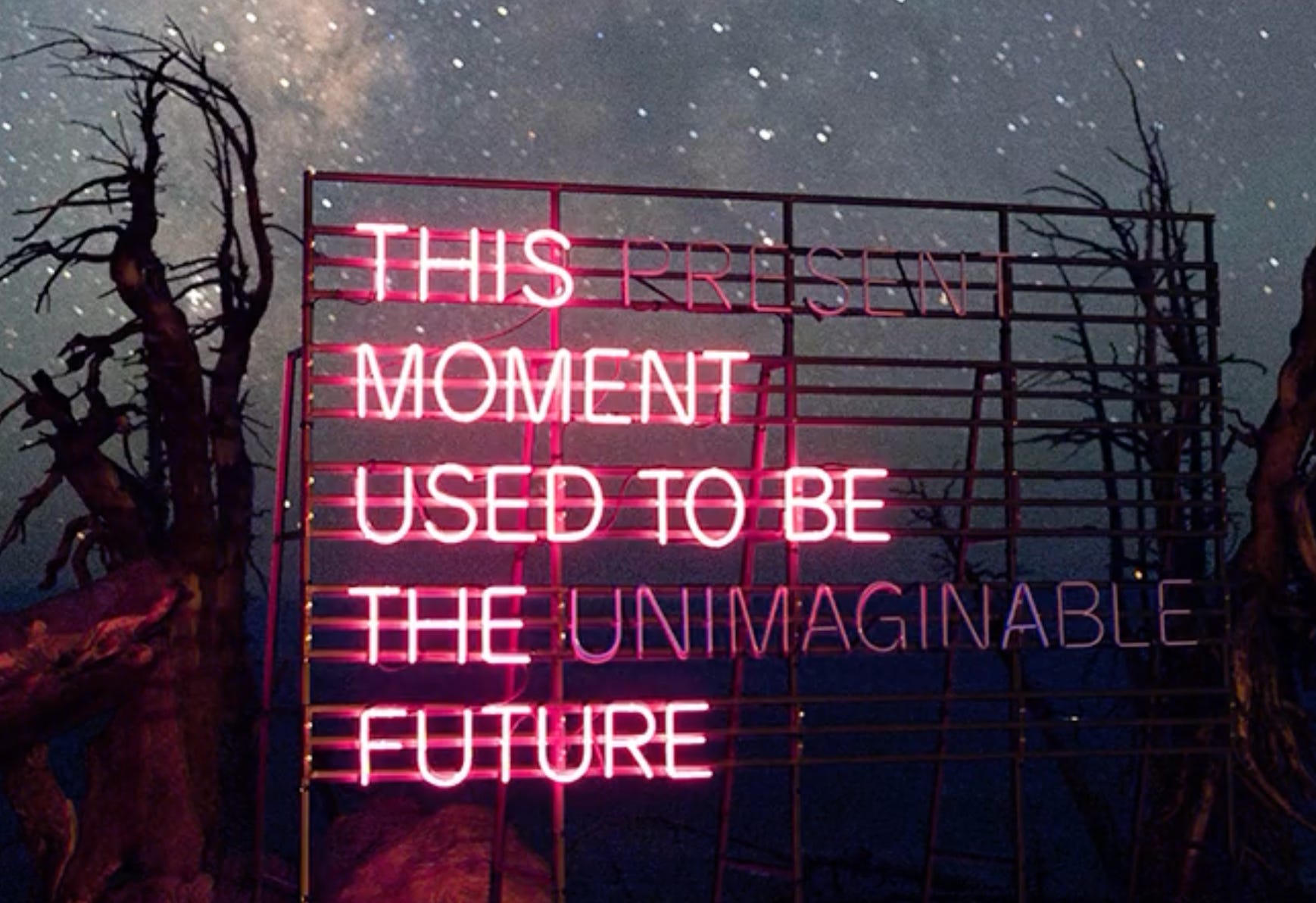
I learned this concept from Thomas Pynchon in Graivty’s Rainbow. The Long Now project has helped me to live it.
Fitness landscapes. See Kauffman but also Mandelbrot.
A fitness-landscape model lets you treat reading and interpretation as a search over a multidimensional space of possible readings, where “height” is some measure of interpretive adequacy, resonance, or coherence relative to the text and its networks of reference. It is also a way to think about writing, as a path through a semantic fitness landscape.
Smooth semantic landscapes
On a smooth semantic landscape, small changes in how you read or translate produce small, predictable changes in interpretive “fitness.” Locally, the surface is gently sloped: if you follow cues like syntax, genre conventions, basic intertextual references, and obvious metaphors, you are gradually led uphill toward a relatively clear optimum that many competent readers converge on. This is often seen as an ideal in conventional writing.
Features of smoothness in this sense:
Lexical and syntactic signals tend to align rather than conflict.
Cultural allusions are either shared or well-signposted, so misreadings self-correct as you move along.
Translations across languages can maintain similar metaphor mappings and tonal profiles without radical distortion.
In such a landscape, interpretive work looks like gradient ascent: close reading, line-by-line explication, and modest contextualization reliably increase fit without requiring large conceptual jumps. This generally bores me.
Rough semantic landscapes
A rough semantic landscape is full of competing local optima separated by sharp valleys: small shifts in emphasis (e.g., which allusion you foreground, which etymology you privilege, which tradition you read through) can move you abruptly into a very different interpretive basin. Experimental, polyglot, or heavily allusive texts often do this on purpose, distributing meaning across etymological echoes, fractured syntax, and cross-cultural references that do not settle into a single dominant ridge.
Characteristics of roughness:
The same phrase supports several incompatible but locally coherent readings; choosing one “locks in” a particular slope and hides others.
Grammatical or generic expectations are repeatedly subverted, so local cues mislead as often as they guide.
Metaphor systems and cultural logics are non-aligned across languages, making any translation feel like a decisive climb onto one ridge among many.
In extreme cases (certain Language-writing, dense ecopoetics, or late modernist texts), the landscape becomes fractal: zooming in on any word, morpheme, or line reveals a miniature version of the same rugged structure—micro-ambiguities that mirror the macro-poem’s indeterminacy.
Reading paths on different landscapes
Once you think in terms of landscapes, “reading strategies” become “search strategies”:
On a smooth landscape:
Gradient-following strategies dominate. Slow close reading, cautious paraphrase, and incremental contextual research tend to move you monotonically uphill.
Different readers starting from different points still tend to converge on similar high-fitness regions, because the main peak is broad and slopes are consistent.
Translation strategies that prioritize semantic equivalence and natural target-language collocations work well; you can optimize locally without worrying that you’ve fallen into a trap.
On a rough landscape:
Local gradient-following easily traps you in one interpretive basin. You need non-local moves—re-reading, shifting theoretical frames, bringing in distant intertexts, or even “zero solutions” (deliberate withholding or suspension of meaning) to jump to a different region.
Productive reading looks like a mix of exploration and exploitation: you climb within one reading for a while, then deliberately descend or sidestep to sample another cluster of possibilities.
Translators and thick readers behave like stochastic searchers: they draft multiple versions, alter rhythm or metaphor systems, or try different temporal “working rhythms,” revisiting the text to re-enact the creative process and explore alternative paths.
One practical illustration: imagine a polyglot poem built from fragments of Japanese, English, and technical ecological language. On a smooth landscape, the languages might align into a single, steadily intensifying ecological metaphor; every interpretive step (following a tree image, a season word, a scientific term) points in the same direction. On a rough, fractal landscape, each fragment plugs into distinct traditions (haiku aesthetics, Anglophone avant-garde, scientific discourse), and your choice of which tradition to privilege at a given moment yanks you onto a different ridge. The “right” reading is not one summit but a practiced ability to traverse and relate these ridges without prematurely collapsing them into one.
One can think of Large Language Models as hyperobjects. I wrote about this back in 2024. I even used an image of mycelium for that post. Even the following seems a bit dated today, but it indicates a strong line in my writing.
Viscous “Hyperobjects adhere to any other object they touch.” LLMs seem to go beyond adherence, they infiltrate. Think of the different ways that mycorrhiza can connect to roots. The ectomycorrhiza surround cells. Arbuscular mycorrhiza infiltrate them and build structures inside the cell. (For more on this see Mechanisms underlying beneficial plant–fungus interactions in mycorrhizal symbiosis.) The same two modes can be seen with LLMs. They are clinging to many applications and work processes, layered over them. But they are also being embedded inside applications and even inside granular functions.
Molten LLMs are massive. The largest already have more than one trillion parameters and they are likely to continue to grow. They are probability based (Bayesian networks) and by tuning the hyperparameter of temperature one can dissolve any rigidities in the model.
“Temperature is a hyperparameter of LSTMs (and neural networks generally) used to control the randomness of predictions by scaling the logits before applying softmax. Temperature scaling has been widely used to improve performance for NLP tasks that utilize the Softmax decision layer.” (From Softmax Temperature by Harshit Sharma).
Nonlocal Where do LLMs reside? On servers somewhere yes, but they touch us everywhere, and our language touches back, especially with the growing use of RAGs (Retrieval Augmented Generation) where the prompt helps to structure the response.
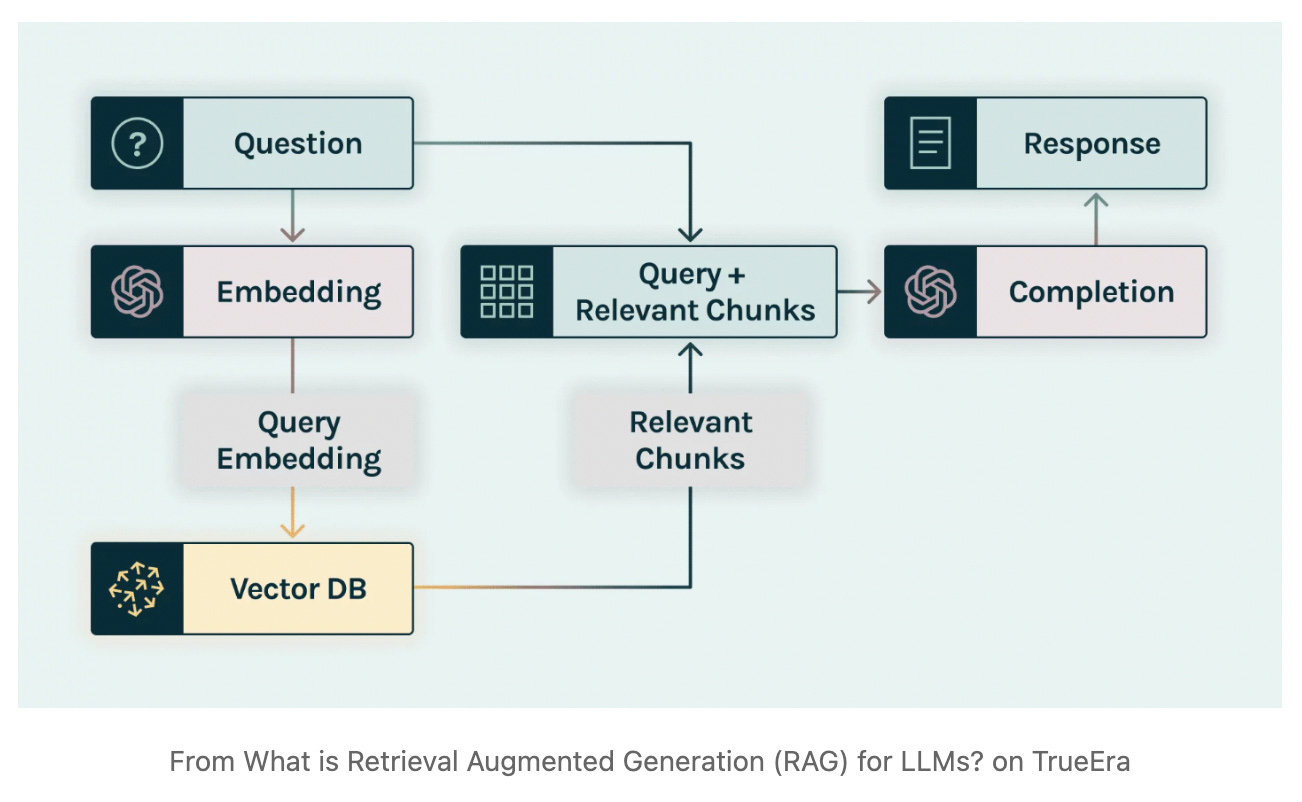
LLMs delocalize data, stripping out context and local, personal relevance in order to bring a vast network of connections stitched together with probabilities.
Phased Current LLMs (at the beginning of 2024) are pushing a trillion parameters. This is still far short of the 60 trillion or so connections in the adult human brain, but we are moving towards this and will likely reach this level in the next 3-5 years. The vectors connecting tokens are multidimensional.
Interobjective Modern LLMs are trained on many diverse training sets and the variety is only increasing. They connect things. One way to think about LLMs is as connecting systems, their ability to predict depends on their ability to make connections. LLMs embed many points of view, they are happy to contradict themselves depending on how a prompt is constructed. Some see this as a weakness. The lack of a point of view or a world model. Others see it as a strength. The ability to answer a question from different points of view. One prompting strategy is to ask an LLM to argue against a position you have constructed with it (LLMs do not have positions or points of view, they come to express a position through a series of prompts).
Transspatial LLMs are already distributed and will become more so as they grow form a trillion to ten trillion to hundreds of trillions of parameters. They are physically distributed and they are accessed by many people from around the world at the same time. Can an intelligence be transpatial? Or is intelligence by nature embodied and set to a particular set of conditions in a world. Pretending to know the answer to this does not help us think about it. A transpatial intelligence, if possible, will be different from anything we have encountered before.
I first became entranced with Ishikawa Kyuyoh’s work in the late 1980s when I picked up the Kyoto Shoin book. One can’t (or at least I can’t) read these in any conventional way, I rather follow lines and flow, recognising the occasional character.
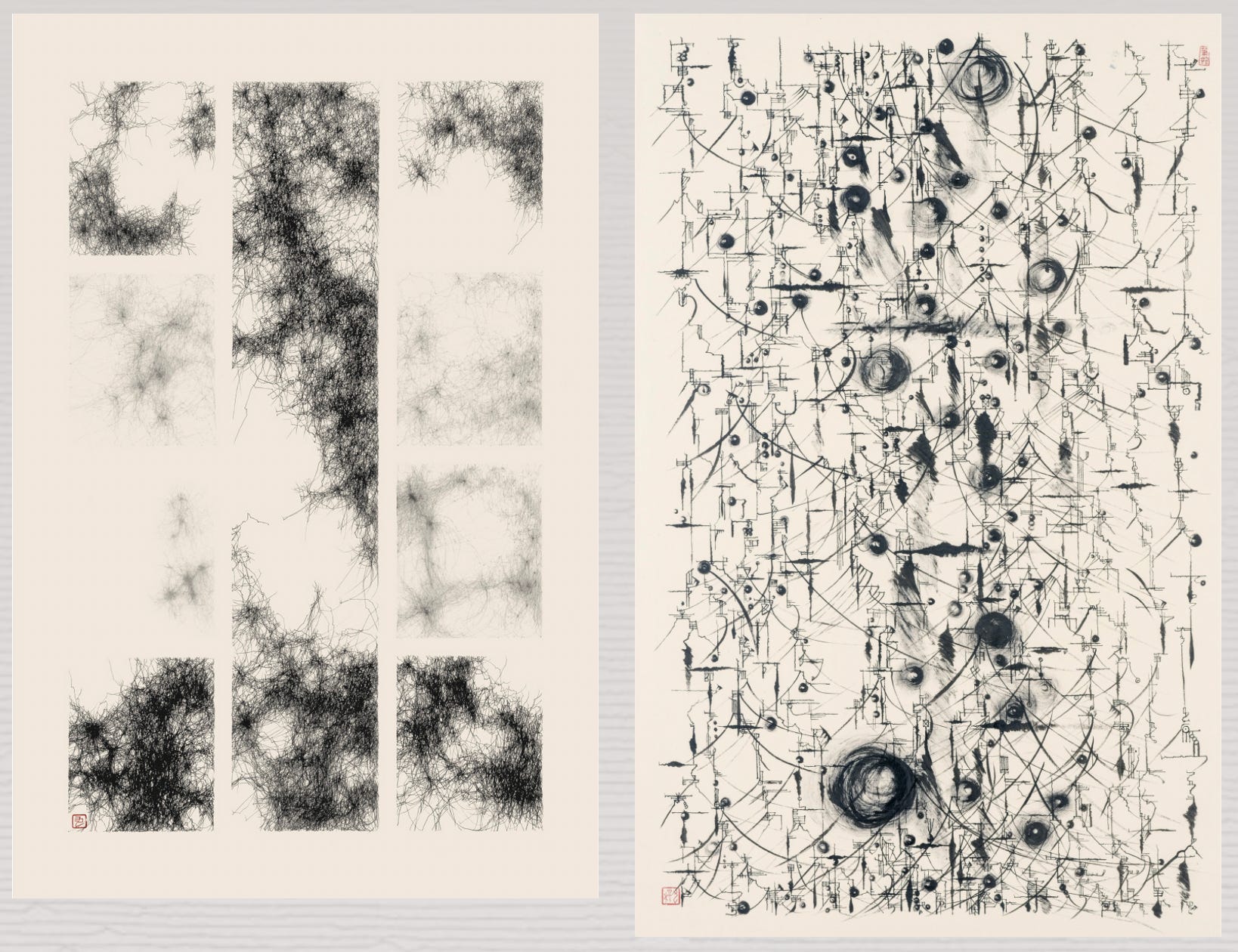
https://ishikawakyuyoh-taizen.com/en/
Reading these texts is like reading a score by someone like Randy Raine-Reusch. There is a physical and emotional rhythm open to be experienced
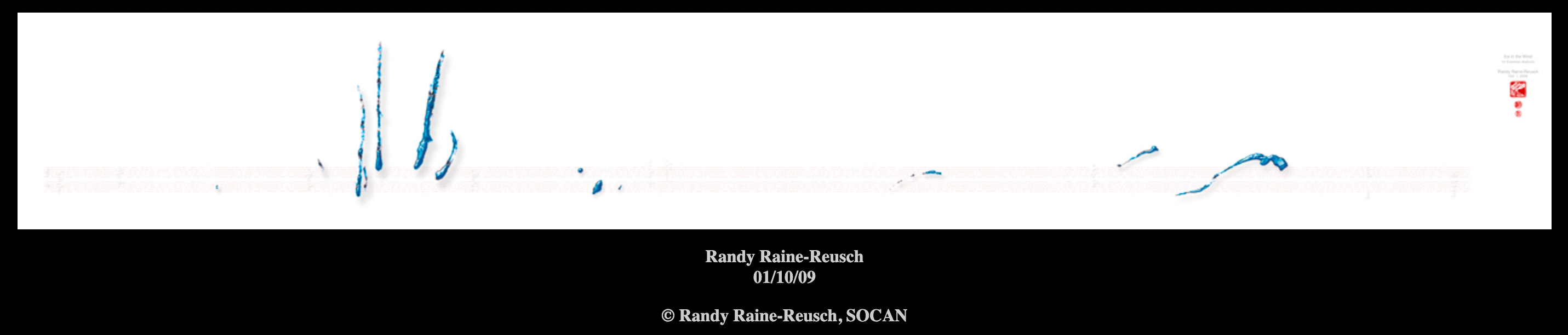
https://www.asza.com/scores/R3icewind.shtml
The physicality of writing with a brush is something Ishikawa covers in Taction, a book I have gifted to several artists in my circle.
My limited ability to read Japanese calligraphy (the ability to read it being closely related to the ability to write it) means that this tracing of physical gesture and rhythm is how I read much Japanese calligraphy, such as this example from the hand of Fujiwara Teika 藤原 定家.
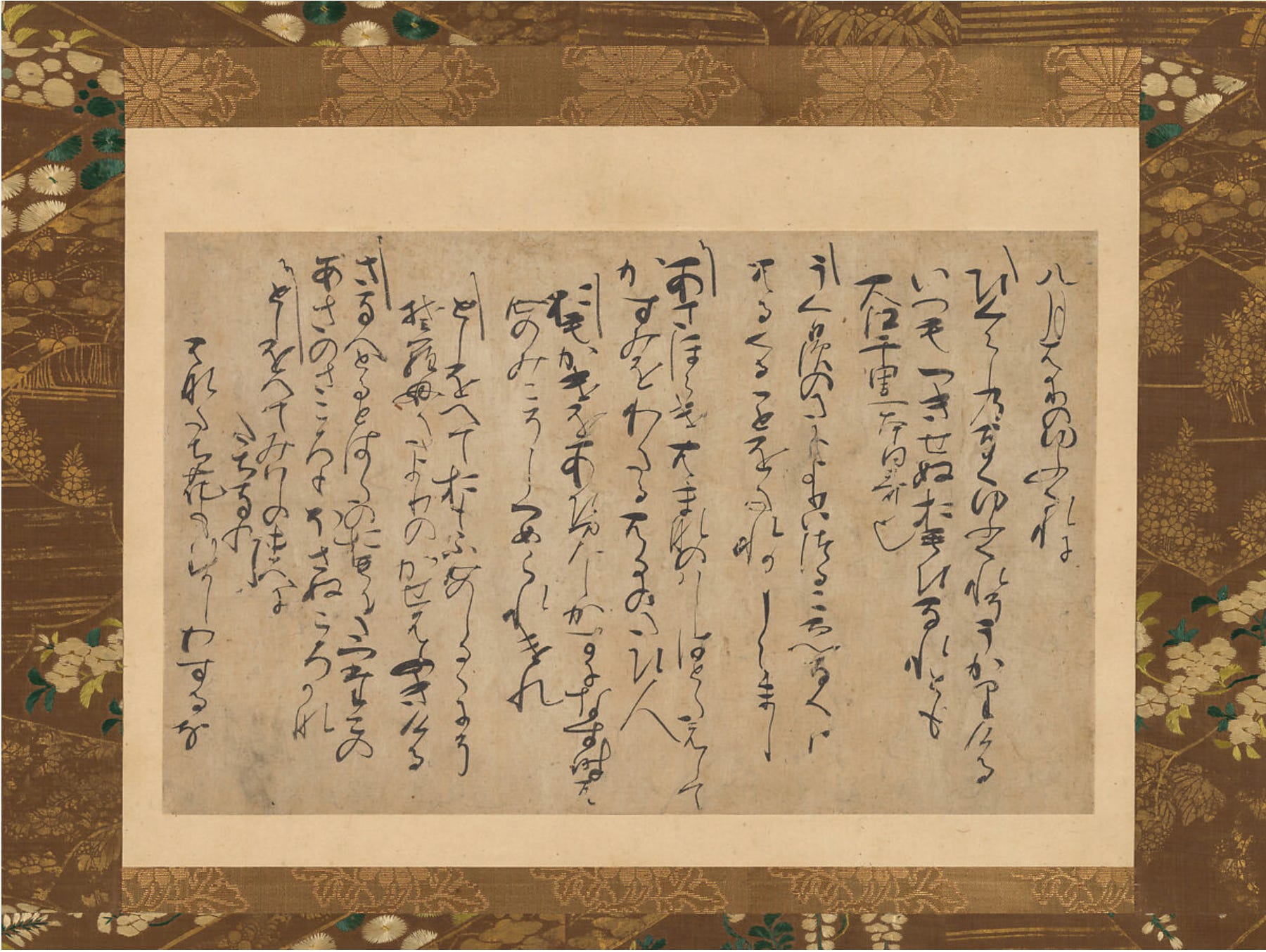
https://www.metmuseum.org/art/collection/search/929151
See Richard Sutton’s work on temporal difference learning.
From Wikipedia,
Temporal difference (TD) learning refers to a class of model-free reinforcement learning methods which learn by bootstrapping from the current estimate of the value function. These methods sample from the environment, like Monte Carlo methods, and perform updates based on current estimates, like dynamic programming methods.[1]
While Monte Carlo methods only adjust their estimates once the outcome is known, TD methods adjust predictions to match later, more-accurate predictions about the future, before the outcome is known.[2] This is a form of bootstrapping, as illustrated with the following example:
Suppose you wish to predict the weather for Saturday, and you have some model that predicts Saturday’s weather, given the weather of each day in the week. In the standard case, you would wait until Saturday and then adjust all your models. However, when it is, for example, Friday, you should have a pretty good idea of what the weather would be on Saturday – and thus be able to change, say, Saturday’s model before Saturday arrives.[2]
Temporal difference methods are related to the temporal difference model of animal learning.
It seems there has been little work to date on using temporal difference learning to better understand whale song, but … perhaps. The model free aspect of TD learning seems important in this. I am using TD learning in some of my more technical work.
Francois Villon (1431 to some time after 1463), poet and thief.
From La Ballade des dames du temps jadis[
“Mais ou sont les nesges d'antan ?
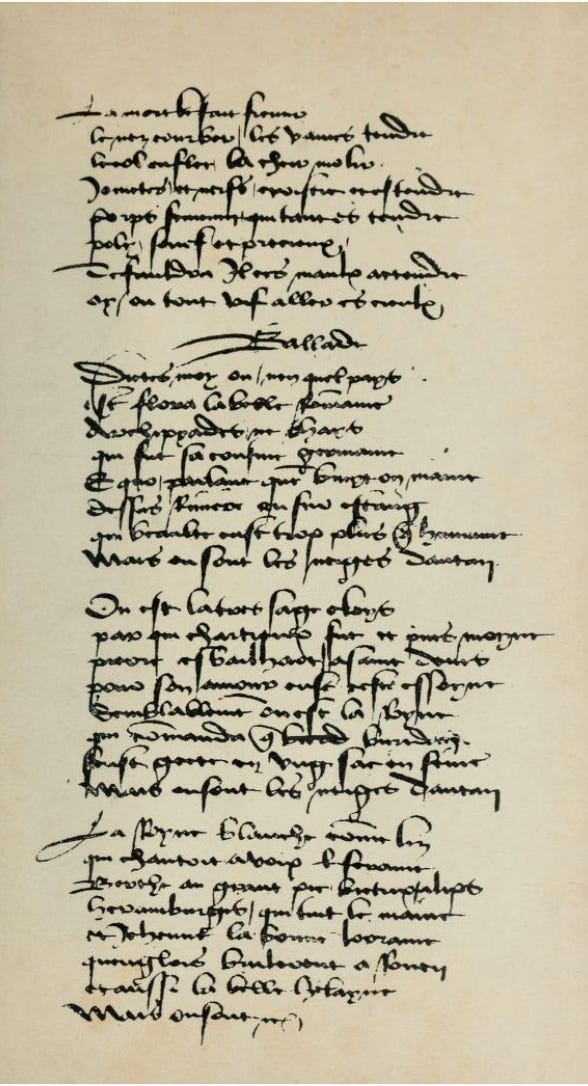
Facsimile du manuscrit de Stockholm, dont l'original est daté 1475.
Tsuyu no yo 露の世
For me this recalls Kobayashi Issa 小林 一茶
The world of dew
Is the world of dew
And yet and yet
露の世は露の世ながらさりながら
Tea 茶 resonates for me with Issa, so he is at the back of my mind whenever I make, drink, share tea.
Yurei 幽霊 a ghost. In some forms of dementia we see people who are not there. We see the people in photos as ghosts who are part of our present past.
The systems for colour reproduction here are process colour used in printing (CYMK for Cyam Yellow Magenta Black) and the direct emanations from our RGB (Red Green Blue) screens. These two systems do not perfectly overlap and the number of existing colours that these systems cannot represent is a transfinite larger than the number of colours they can represent (working on a formal proof of this).
This tries to connect the previous threads through repetition. I am getting a better understanding of how I want to structure my work, at least for now.
Notes: The three line notes I collect daily and have been publishing once a month.
Threads: A series of notes.
Sequence: A series of threads, often organised around a seed text.
Mycelium: First used in this post, a thread based on a series of threads and weaving them together. May not stay with ‘mycelium.’ Am thinking about skein as a term for this.
Seed: A text used to inform selection and sequencing of notes into a thread
Frame: A faceted taxonomy (a simple ontology) used to define different types of links between notes in a thread.
Seed + Frame selects Notes for a Sequence of Threads