
Nonlocality
Writing as hyperobject 2

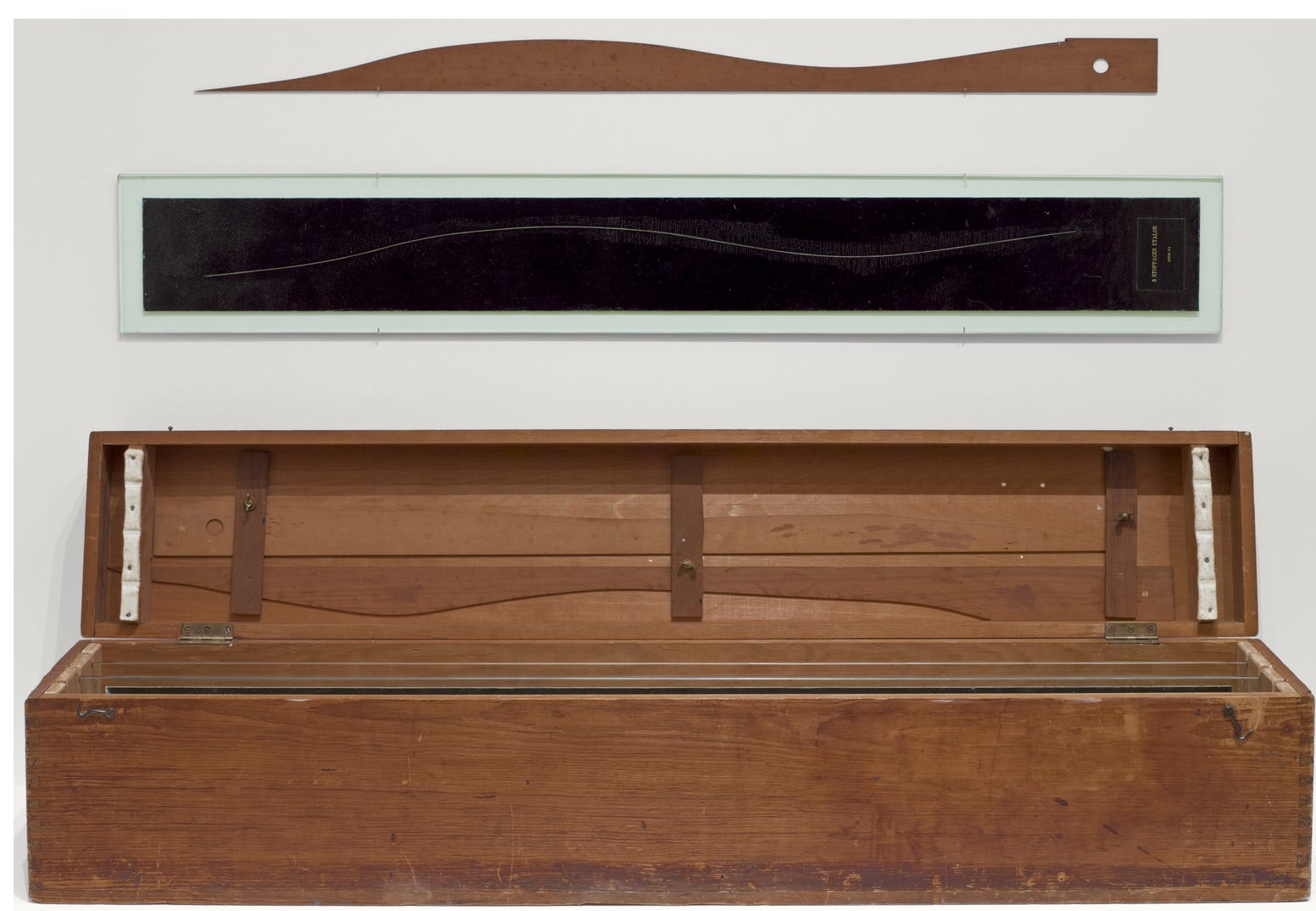
Marcel Duchamp 3 Standard Stoppages.
What place am I in? What place am I writing from? Hyperobjects are not confined to a location, they constitute space rather than reside in it. My language wants to be local and internal but fails me. My language wants to be general and external but fails in the world. In all that failure is hope.
For Lev Vygotsky, thought and language create each other. Inner speech lacks the grammatical completeness of regular speech; it is condensed and focused on the meaning of words. Poetry is this inner speech made social (not just public but social, part of conversations). Predication without subject. The Mu 無 of possibility.
Measurement is what is measured. The measure from outside of what is inside. My language is how I try, and fail, to measure the world. Any measurement is a choice, the choice of which of many dimensions matter. There are many ways to measure the temperature of a room (by the window, at the ceiling, at the floor, over time … and so many more ways to measure the temperature of a place, let alone a planet). In the Heisenberg uncertainty principle you cannot simultaneously know both the exact position and the exact momentum (speed and direction) of a quantum particle. The more precisely one is measured, the less precisely the other can be known. Is the same true of my language? The more local and precise the more language loses context and reference. The more abstract and connected the less it is part of my conversations.
With measurement comes scale. These notes and even the threads spun with them seem very small. Three lines. Generally ten to fifteen syllables. Seventeen is a lot of syllables in English. They sometimes try to be smaller and vanish into a point then let that point pull everything into itself so that it disappears. The is where they collapse into infinities. (What a silly claim.) But I do use them to count.
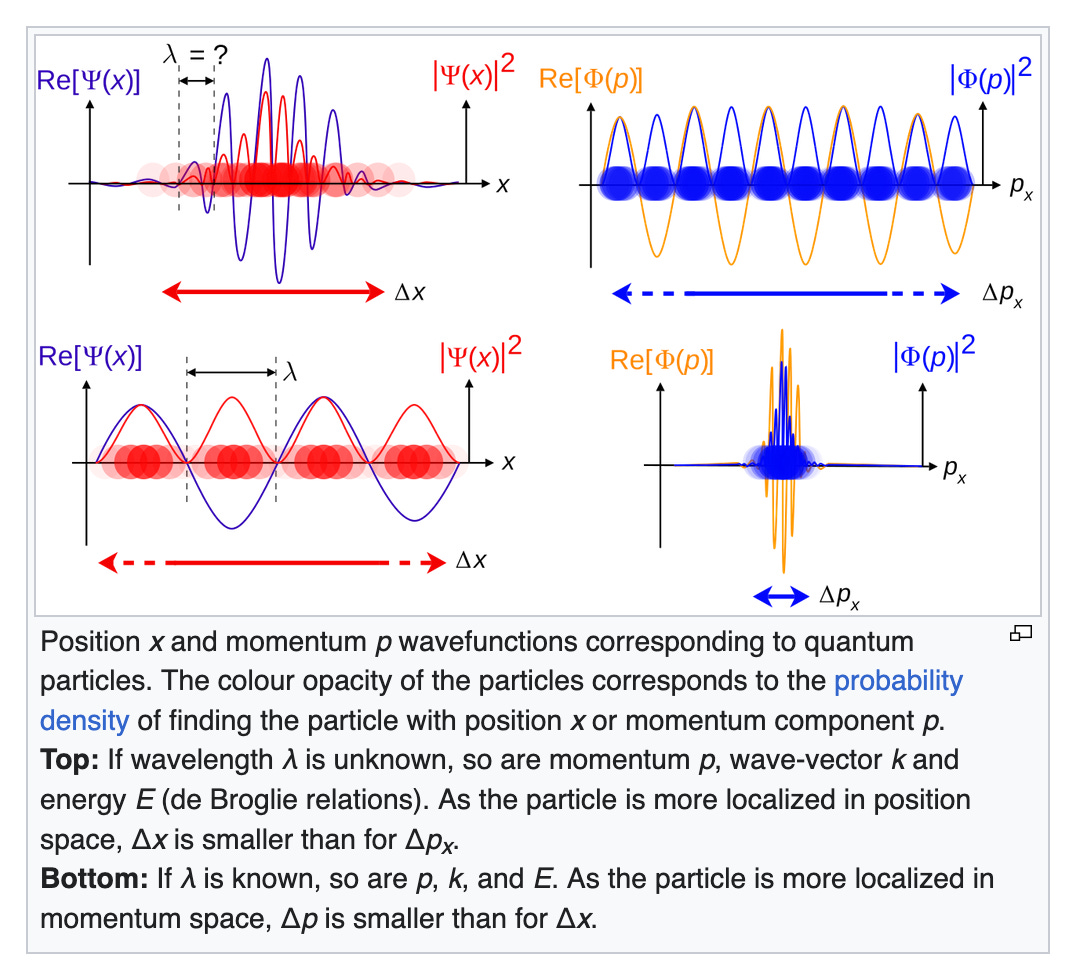
Image from Wikipedia.
Hyperobjects are not necessarily large scale, and they cannot be without scale, but they are anything but small. They scale on many dimensions at once. In machine learning, embeddings are a representation that maps complex, high-dimensional data into a lower-dimensional vector space of numerical vectors. Machine learning works by comparing the distance between embeddings by measuring (that word again) the cosine similarity or angle between vectors. All those embeddings and the distance are a hyperobject. A note can be represented as an embedding and then it is some distance from all the other notes.
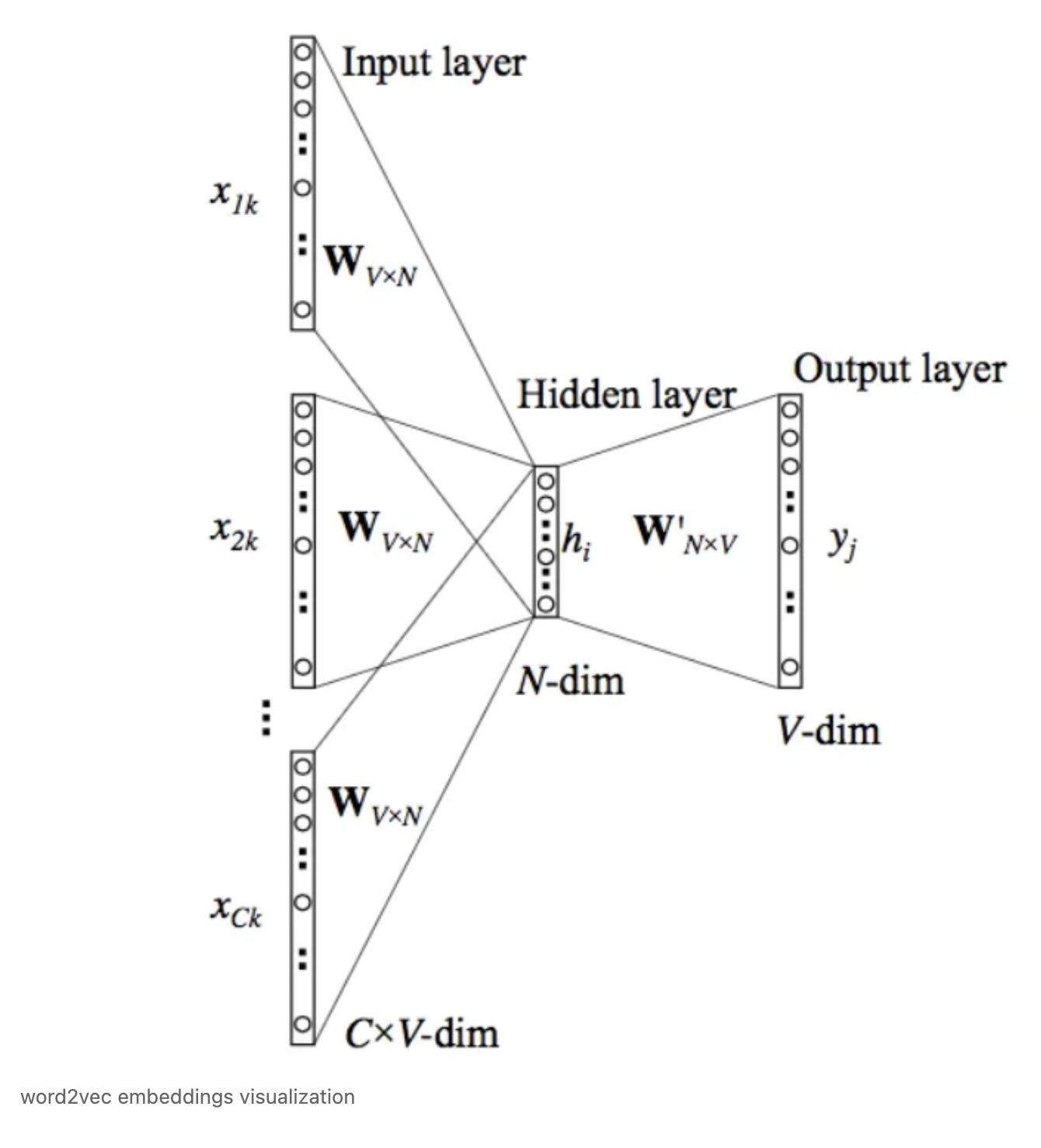
From LLM Embeddings Explained: A Visual and Intuitive Guide by Hesam Sheikh Hassani on Hugging Face.
Living inside and outside hyperobjects, I am never sure where I am. Uncertainty can never be resolved even if the scale changes. The notes, embeddings, give me waymarks that help me on my way, and help me through the threads, the sequences, the sutures composed from the notes.
Any note I can write is withdrawing from itself, from me, from you. That is its presence. Its opening.
A Method for Selection and Sequencing from nonlocality.
1. Selection by uncertainty-position: Assess each note on a rough ΔxΔx / ΔpΔp axis — how local and concrete vs. how distributed and conceptual is this note? A well-formed sequence, like a renga 連歌 moving through seasons, should modulate between localized wave-packets and spreading plane waves. Avoid sequences of notes that all sit at the same “precision”.
2. Embedding distance as the criterion of link: Use cosine similarity between note-embeddings to find the immediate successor — the note that is meaningfully close without being redundant. Similarity near 1 creates chant, near 0 creates rupture; the productive zone (roughly 0.4–0.7 cosine similarity) creates renga-style link-and-shift.
3. The kireji 切れ字 as structural requirement: Every three-line note should contain or enact a cut — a moment where the note folds against itself, where position and momentum are simultaneously (and necessarily) indeterminate. Notes without a cut are descriptions; notes with a cut are measurements that acknowledge the cost of measuring.
4. Sequencing by dimensional shift: Because hyperobjects “scale on many dimensions at once,” sequence notes not only by semantic proximity but by which dimension they foreground — image, concept, body, time, scale. A sequence that shifts dimensions with each link enacts the multi-scale nature of the hyperobject it participates in. This is the kigo 季語 logic extended: not just seasonal reference but dimensional reference — a register-word that places each note in its scale-moment.
Some of these notes are edited from the source document.
The Cost of Measurement
Just measure
Relative to the sound
Made falling
A common stoppage1
In the throat measuring
Fallen sounds
Swallowing not
Swallowing burping
Repeatedly
XP - PX = ih/2π2
Position with momentum
Does not equal momentum with position
Forcing uncertainty
Trying to say nothing
And saying it again
Repeating myself
More difficult to say
Nothing than something
And again
Trying to say nothing
And saying it again
Repeating myself
The words need
Mean no more than what
They try to say
“Any note I can write is withdrawing
from itself, from me, from you.
That is its presence. Its opening.”
Water as hyperobject
Water some snow
Then tea waiting for
The tannin’s colour
The vague point where
Rain turns to snow
Snow to slush
Snow absorbing rain
Caught in a phase shift
Back to water
Completeness requiring
Contradictions the water vapour
Locked in ice
Water choosing
Not choosing to
Claim a state
State transitions fluctuate
Faster than the boat can slide
Across blurred surfaces
The top of the wave
Travelling faster than the base
Spilling over
Instant release
Of energy into foam
And turbulence
Water into water
Water washing over waves
Receding into
Empty of nothing
The water foams and subsides
Back into its form
The body an Uncertain Instrument
Chest pain distracting
Attention from breath
Walking slowly
Something as simple
As drinking a glass of water
About to change
Swallowing fear I
May not be able to swallow
In the future
Wild growth the
Gullet closing pretending
Not to choke
The tumor buried
Deep in the muscle
Must be removed
Collapsed my lungs
Systems mobilised
Esophagus removed
Solid pain
Without the blockers
Where the chest drained
Pain softened
Breath comes shorter
Falling asleep
Remembering to breathe
Not remembering to
Not remembering
Rain silence measured
By time between breaths
Remembering to breathe
The world of dew
Is the world of dew
And yet …
露の世は露の世ながらさりながら
Kobayashi Issa 小林 一茶
Withdrawal
Gone given lost
Into other into else
Forgiven less
Gone again
Given to another
Lost to us
Gone given other
Into else into something
Inside without
Nothing’s edge
Or border to let
Itself back in
Intent reduced
Within itself into a
Point within a point
In distance depth
Into lost spaces
Left between
Incense makes
No sound as it burns
The trace remains
Something given forgotten
Still giving in the air
Darker
Given into other
Into self without asking
A place to rest
If I had not done
What I did not say to you
While we are apart
Scale
Intent reduced
Within itself into a
Point within a point
A circle as
Complete as the distance
To any center
All points the same
Distance from each other
Contain a whole
Counting stairs counting
Going up and going down
I get the same number
It is hard to count
Pairing one thing another
Up the steps
This number then
Another and after that
Able to go on
The rationals being
A dense subset of the reals
As a stone is to water
A fundamental simple
Pure colour as elementary as
Real numbers
Prime density trends
To zero at infinity as the clouds
Become transparent
Light still light
Inside its wavelength
Coheres
Any real number a
Halo around a vanishing
Point inside it
Bohr, Niels (1934), Atomic Theory and the Description of Nature. Cambridge at the University Press.
Goodfellow, Ian, Yoshua Benigo and Aaron Courville (2017) Deep Learning. MIT Press
Harman, Graham (2018) Object Oriented Ontology: A New Theory of Everything. Pelican.
Hassani, Hesam (2025) LLM Embeddings Explained: A Visual and Intuitive Guide. Hugging Face (accessed May 30, 2026).
Heisenberg, Werner (1958) Physics and Philosophy: The Revolution in Modern Science. Penguin.
Morton, Timothy (2013), Hyperobjects: Philosophy and Psychology After the End of the World. University of Minnesota Press.
Vygotsky, Lev (1978), Mind in Society: The Development of Higher Psychological Processes. Harvard University Press.
Wittgenstein, Ludwig translated by G.E.M. Anscombe (1956), Remarks on the Foundations of Mathematics. Basil Blackwell.
Referencing Marcel DuChamp’s Three Standard Stoppages, one of my favourite art works. In the MOMA collection in New York. Why do I say ‘common’ and not ‘standard’? Maybe I am trying to get at the idea that what is standard must be shared and become common.
The equation
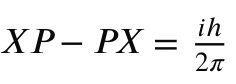
is the canonical commutation relation, a key formula in quantum mechanics. It states that the order in which you measure or apply the operations of position (\(X\)) and momentum (\(P\)) matters. Because the difference between these two sequences is non-zero, it proves that you cannot simultaneously know both the precise position and precise momentum of a quantum particle, directly giving rise to the Heisenberg Uncertainty Principle.