
From notes to sequences
A taxonomy of connections

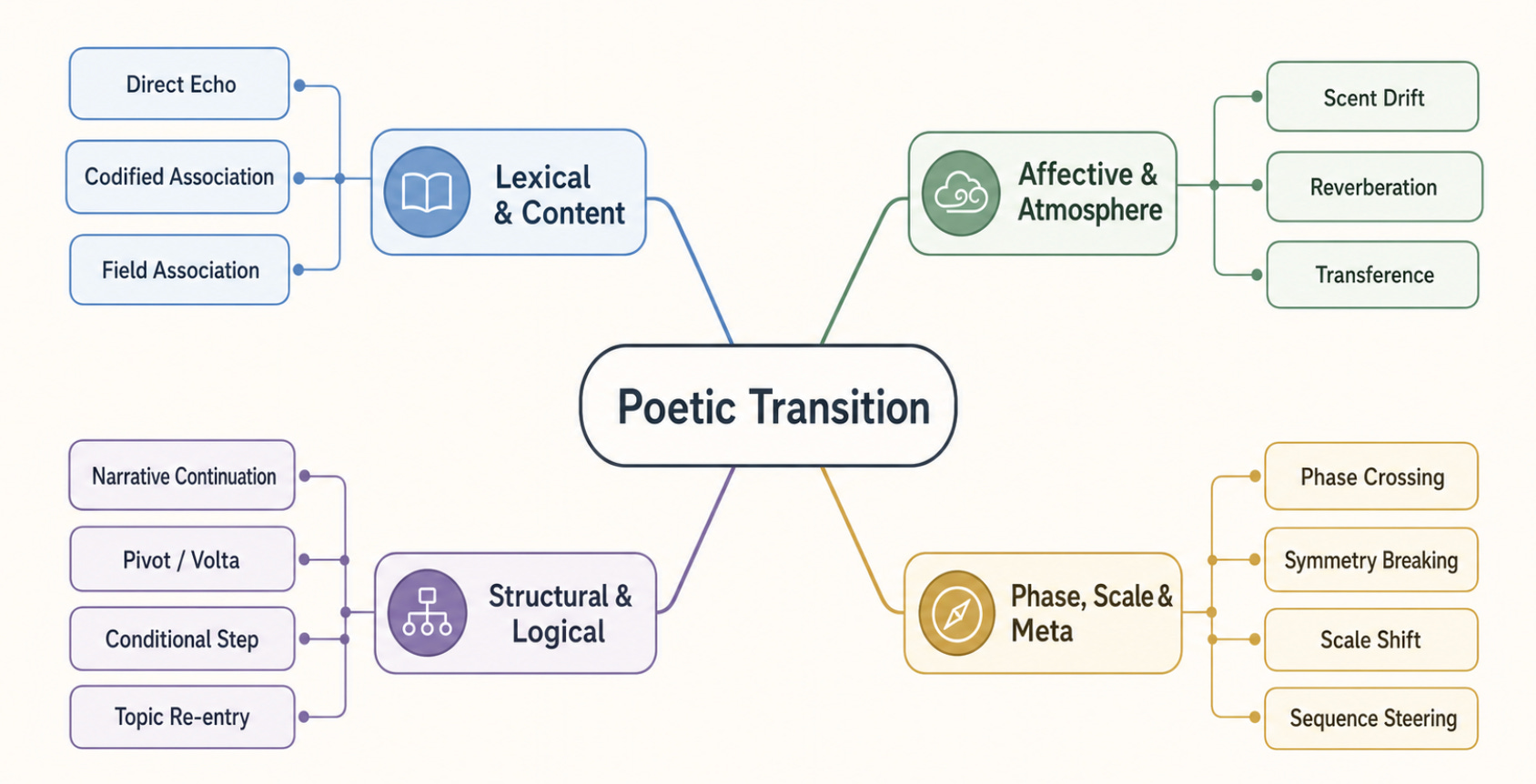
Some thoughts on process …
At present there are three steps in my writing process.
I am constantly taking notes that are connections to my experience, emotional life, body and thought. I often use a three line form that I have developed over the years that comes from Japanese haiku, but that are clearly not haiku. I write these in a notebook or on scraps of paper, or on the inside back cover of whatever book I am reading. I then transfer these to an electronic file. I have started to share these raw notes. See March - Raw Notes and April - Raw Notes.
Every few months I sift through these, discard about a third of them, sometimes half, and revise or rewrite the rest.
That is where I used to leave things. But since starting Folding Notes I have begun to organize the notes into threads.
A thread generally has some sort of organizing theme. The same note can appear in more than one thread and very occasionally a note or version of a note can be included more than once in the same thread.
I have been thinking about how I organize these threads and the transitions between them.
Most of the time I hand pick the notes for a thread and sequence them. This has gotten me thinking about why one note follows the next, and to see if there is some way of surfacing what is happening. I am thinking there are four connected ways that I do this: from renga, from Japanese renga, mathematical equations, phase transitions in physics and connectors in language. These are facets, in that two notes may be connected in more than one way. One book that has shape a lot of my thought over the years is K.S. Ranganathan’s book Colon Classification, which is the origin of modern facted classification systems.
From Wikipedia “Faceted classification is a system for organizing information by breaking down subjects into multiple, independent, and fundamental categories (facets) rather than a single rigid hierarchy. These aspects—such as topic, place, and time—are combined to describe complex items, enabling flexible, multi-dimensional browsing and precise searching.”
Renga 連歌 - I have learned a lot, am learning a lot, from Jpanese renga. Sōgi 宗祇, Shohaku 肖柏 and Shinkei 心敬 are dominating my imagination these days and I am rereadin Basho as a renga poet rather than just focussing on what we have come to call haiku. Renga linking is interesting in that it is much deeper than just the links between two verses. The structure and distribution of the verses on the page, repetition of themes and season words, and references to work outside of the sequence are all woven in.
Mathematics - Much of math is about transitions and about how and why one thing ‘equals’ another. There is a rich semiotics of connection available here. Some notes attempt to represent or condense or comment on equations so this seemed a possible entry point.
Phase transitions - Vapor to water to ice. The viscous liquid at high pressue and low tempertautres deep in a glacier. Breaking hydrogen bonds. Cavitation as a model for the changes in meaning when the sense comes under pressure.
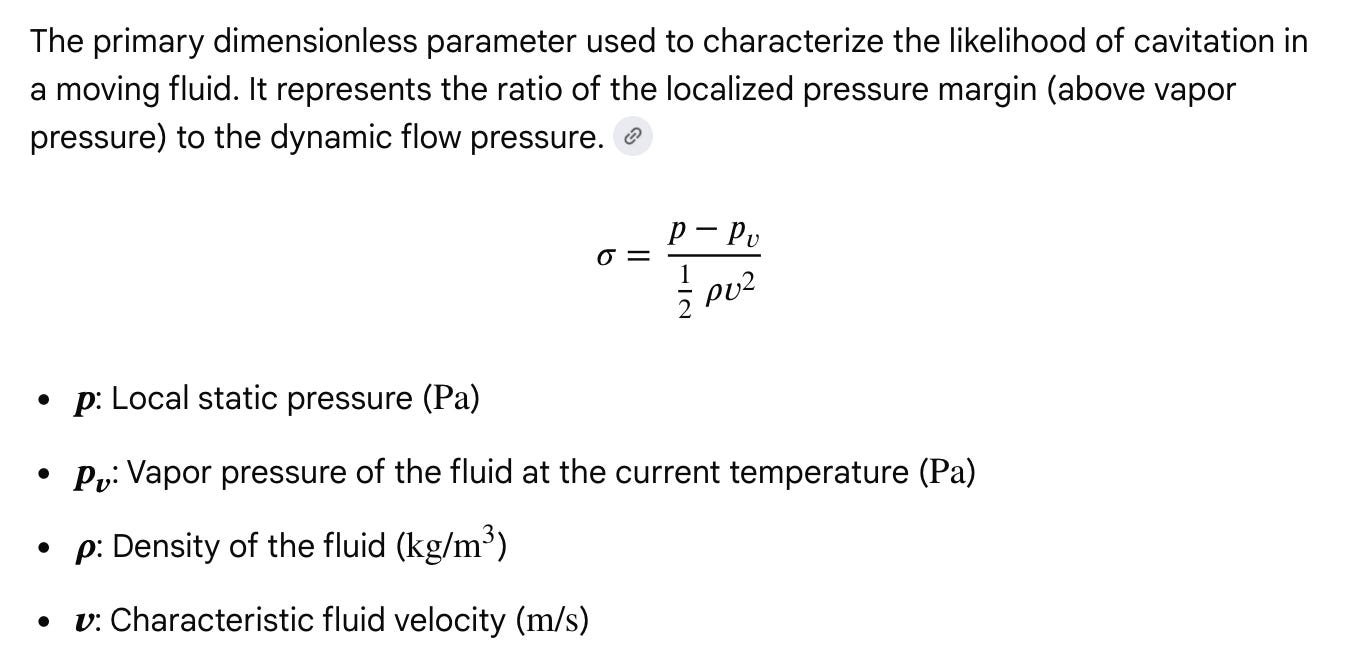
Connectors - This is primarily syntactic and logical connectors. Zukofsky included prepositions in the index to A: seventy-five entries for ‘a’ and seventy-seven for ‘the’. Connectives though are absent. Thinking about what connectives would connect two notes has been useful in sequencing: and, or, but, if … then, from, to … the sequence of notes can imply many different connections.
What is missing here is musical transitions. I am thinking about how to formalize this and lightly apply musical transitions and structures to sequences. So all of this is very much an ongoing exploration. A frame for musical transitions my provide an alternte way to generate and organize seqiences.
I developed a long, complex document describing each of these approaches in detail. I am happy to share this if you are interested. Ping me or request it in the comments. The document is more than 130 pages long, too long to be a working document. I used one of my preferred AIs, Perplexity, to simplify and condense it. The result is shared below.
I plan to explore this by applying it to a series of threads I am planning on Timothy Morton’s hyperobjects. Hyperobjects as Morton uses the term have several properties that connect to how I use poetry. They are viscous, nonlocal, undulate, phased and interobjective. I am going to try to generate the threads by using a seed text I will write and then applying the following facted classification to generate links to my library of notes. We will see if anything interesting results.
Connettion framing - 24 nodes
1. Direct Echo
Facets: LEXICAL · CONTENT · DISTANCE–NEAR
Use when Note B repeats or slightly varies a salient word, image, or concrete detail from Note A.
The second note feels like an immediate echo or reflection: the reader clearly sees “the same thing, shifted slightly” (e.g. moon → same moon in different position).
2. Codified Association
Facets: LEXICAL · CULTURAL · DISTANCE–NEAR
Use when Note B picks up a conventional pair or “codified” association from Note A (warbler → plum blossom; autumn → moon; exile → sea).
This brings in the classical yoriai / hon’i spirit: B inherits a ready-made cultural script or seasonal essence from A.
3. Field Association
Facets: LEXICAL · SEMANTIC–FIELD · DISTANCE–MEDIUM
Use when Note B chooses another element from the same semantic field as A (bow → arrow; ship → harbor; code → bug).
The link is not a fixed pair but a shared world; it feels like walking to another object in the same room.
4. Pivot Word Shift
Facets: LEXICAL · AMBIGUITY · DIRECTION–SIDEWAYS
Use when a word or phrase in Note A allows two readings and Note B commits to the alternative, or plays on sound/meaning.
This compresses kakekotoba and torinashi-zuke: B “turns” the hinge word and reveals a second semantic doorway (matsu: pine/wait; bay/resentment, etc.).
5. Function / Aspect Link
Facets: CONCEPTUAL · PART–WHOLE · DISTANCE–NEAR
Use when Note B focuses on a function, property, or component of something in A (bow → stretching; city → sirens; cloud → shadow).
This creates a close, almost metonymic motion: we zoom into one operational aspect of what was previously whole.
6. Narrative Continuation
Facets: CONTENT · TEMPORAL–FORWARD · DISTANCE–NEAR
Use when Note B continues, extends, or lightly explicates the scene, situation, or story implied in A.
Simple examples: next moment, tomorrow, another view in the same place, the next sentence in a micro-story, etc.
7. Omitted Center
Facets: CONTENT · OMISSION · DISTANCE–MEDIUM
Use when A and B share a narrative or situational link that is never named directly.
The reader must infer the connecting figure or event (e.g. soldiers marching → a house in disarray, with doctor and patient implied but unstated). The joint is felt as a gap that nonetheless “clicks.”
8. Scent / Atmosphere Drift
Facets: AFFECTIVE · ATMOSPHERIC · DISTANCE–FAR
Use when Note B does not follow A’s story or words, but shares its mood, temperature, or existential color.
This is nioi / yosei: A’s “emotional air”—solitude, fatigue, erotic tension, dread—quietly persists in an entirely different scene in B.
9. Reverberation / Shock
Facets: AFFECTIVE · INTENSITY–HIGH · DISTANCE–MEDIUM
Use when the emotional force of Note A (violence, breakage, sudden decision) resounds in a different but equally charged situation in B.
The joint is not narrative but energetic: a smashed bowl → a twisting sabre; an argument → a door slammed by the wind.
10. Transference / Reflection
Facets: AFFECTIVE · MIRRORING · DIRECTION–BIDIRECTIONAL
Use when A and B seem to mirror or transpose one another: the quality in A appears in B under a new guise, and the two illuminate each other in retrospect.
It can be gentle (erotic atmosphere → court scene) or stark (blunt physical blow → violent winter weather). The two notes form a reflective dyad.
11. Social Rank / Status Parallel
Facets: CONTENT · SOCIAL · DISTANCE–MEDIUM
Use when Note B matches A by social level, class markers, or “rank” (humble food → humble work; luxury interior → aristocratic gesture).
This can be combined with other facets: a kurai-like echo establishes a social equivalence even when content otherwise shifts.
12. Cultural Trace / Nostalgia
Facets: CULTURAL · MEMORY · DISTANCE–FAR
Use when Note B carries the “ghost” or afterimage of a figure, era, or story only implied by A.
There is no explicit allusion; instead, a shared cultural halo (omokage / honkadori without quotation) connects them, like two different films both haunted by the same myth.
13. Place / Setting Weave
Facets: SPATIAL · ATMOSPHERIC · DISTANCE–NEAR
Use when Note B either:
Places a new action in the environment implied by A, or
Reconstructs the environment of A from an action or object in B.
This is keiki: the setting becomes the hidden thread; the camera moves but the weather and architecture hold the chain together.
14. Seasonal / Elemental Continuity
Facets: SEASONAL · ELEMENTAL · STRUCTURAL
Use when Note B maintains or reactivates the same season, natural element, or hon’i (moon → loneliness; autumn insects → transience) established in A.
This is a generalized kigo / hon’i link: the shared seasonal or elemental essence is the binding field.
15. Distance Leap (Near → Far)
Facets: DISTANCE–FAR · COGNITIVE-GAP · DIRECTION–FORWARD
Use when you deliberately insert a large logical, narrative, or imagistic gap between A and B, inviting the reader to supply the bridge.
Think soku or a first/second-order phase jump: the notes feel discontinuous, but some deeper pattern (tone, theme, topology) makes the leap legible. Use sparingly to avoid pure randomness.
16. Structural Pivot / Volta
Facets: STRUCTURAL · PERSPECTIVE · DIRECTION–TURN
Use when Note B “turns” from the mode or stance of A: description → reflection, outer scene → inner thought, impersonal → personal.
This generalizes the tanka pivot and volta: we remain near in content, but the relation to that content changes (from seeing to being, from thing to judgment).
17. Elegant Confusion / Double Image
Facets: IMAGISTIC · ANALOGY · AMBIGUITY
Use when Note B overlays a second image on the first by way of a perceived “mistake” or mirroring (snow as blossoms; neon as rain).
This integrates mitate with scent-linking: B doesn’t explain; instead, it reveals that A was always already “also something else.”
18. Operational / Imperative Shift
Facets: LOGICAL–OPERATIONAL · DIRECTION–PROCESS · META
Use when Note B feels like a transformation “command” applied to A: inversion, negation, scaling, differentiation, limit-taking, reordering.
The connection is procedural: if A is x, B is “f(x)”—a consequence, derivative, or recombination. This borrows from mathematical operational signs and Rotman’s imperative reading of equations.
19. Conditional / Counterfactual Step
Facets: LOGICAL–CONDITIONAL · MODAL · DIRECTION–BRANCH
Use when Note B presents a condition, alternative, or counterfactual relative to A (“if this were otherwise,” “in another timeline,” “unless this breaks”).
Think of it as moving from proposition to its modal neighbor: A is the world; B is the adjacent possible or forbidden variant.
20. Phase / Threshold Crossing
Facets: PHASE-TRANSITION · INTENSITY–CRITICAL · DIRECTION–THRESHOLD
Use when Note B marks a qualitative shift in the “state” implied by A: solid → liquid, crowd → stampede, flirtation → confession, attention → exhaustion.
The sequence passes a critical point: the order parameter of the poem changes—temperature, density, social configuration, emotional coherence.
21. Symmetry Breaking
Facets: PHASE-TRANSITION · SYMMETRY · DIRECTION–IRREVERSIBLE
Use when A presents a balanced, symmetric, or reversible situation, and B introduces an asymmetry that chooses one side (a decision, a crack, a preference, a bias).
This can be very quiet (an almost identical scene with one small difference that “chooses”) or abrupt (the poem picks a side, a voice, a direction).
22. Scale Shift / Renormalization
Facets: SCALE · META · DIRECTION–IN/OUT
Use when Note B moves up or down in scale relative to A: micro → macro, personal → planetary, leaf → forest, line → system.
The connection is that B is “the same process seen at another length scale,” echoing RG ideas: weather → climate; twitch → culture; a single note → the entire sequence as hyperobject.
23. Topic Reallocation / Re-entry
Facets: STRUCTURAL · RECURSIVE · DISTANCE–LONG
Use when Note B recalls a theme, image, or motif not just from A, but from an earlier point in the sequence, respecting some spacing rule.
This condenses uchikoshi, sarikirai, kukazu, and kakari/musubi: B re-enters an earlier topic after an interval, creating an arc or ring without immediate repetition.
24. Discourse / Sequence Steering
Facets: META · PHRONETIC · DIRECTION–GUIDING
Use when Note B comments on, redirects, or changes the pacing or framing of the sequence itself—slowing, quickening, closing, or opening a new movement.
This is a generalization of jo–ha–kyū: B may feel like prelude, expansion, or rush to closure, even if content is minimal. It’s less “about” A than about where the sequence wants to go next.
References
Badiou, Alain translated by Oliver Feltham (1988) Being and Event. Bloomsbury.
Chen, Eugenia (2025) Unequal: The Math of When Things Do and Don’t Add Up. Basic Books.
Horton, H. Mack (2025) Linked Verse in Medieval Japan. Columbia University Press.
Humberstone, Lloyd (2011) The Connectives. MIT Press.
Morton, Timothy (2013) Hyperobjects: Philosophy and Ecology Aafter the End of the World. University of Minnesota Press.
Ranganathan, S.R. (1933) Colon Classification. Madras Library Association.
Shinkei translated by Esperanza Ramirez-Christensen (1464) Murmured Conversations: A Treatise on Poetry and Buddhism by the Poet-Monk Shinkei. Stanford University Press.
Quite fascinating. I have never tried breaking down my process in such great detail. My writing is now focused almost entirely on the notebook. One step in the process leading to a work was to read back over notes repeatedly in order to find the bits and pieces which would go into a work. This is something I no longer do. At some point I came to feel that the notebook - the fragments in their raw state - was where the poetry resided, so I did not attempt to bring a final polish. There’s also something about the physicality of the notebook that I don’t want to lose.