
Ownership
What can we own and what do we owe to what we own?

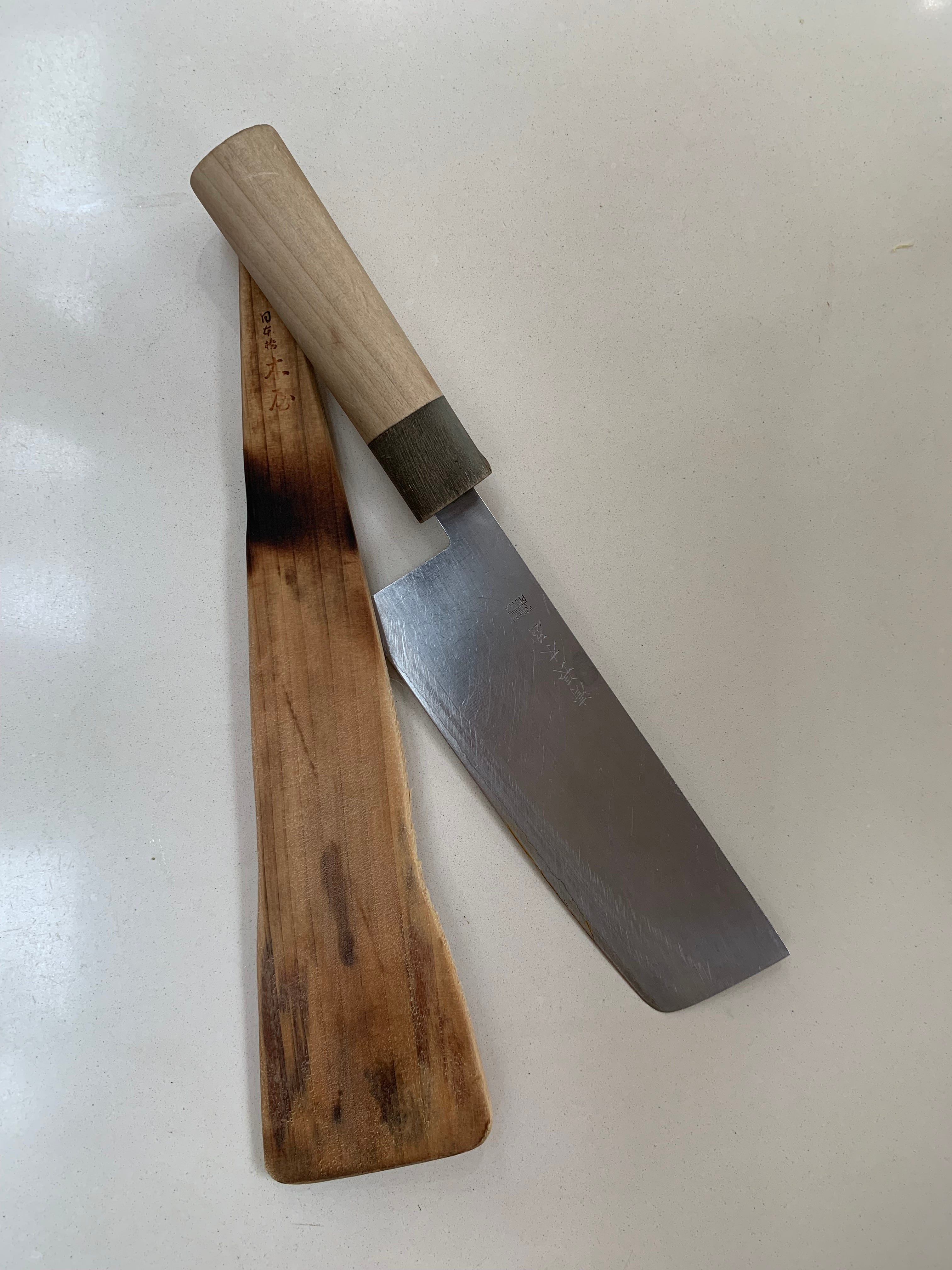
Two of my favourite tools, that I feel responsible for, and hope to hand on.
What does it mean to own something?
As we move deeper into the Anthropocene1 and human populations begin to decline2 basic assumptions will change. One that will change is our beliefs about ownership. The capitalist belief in absolute ownership and rights over objects and other animals will have to be replaced.
If I own something I am responsible for it and have obligations to what I own, the people who created it and the society I live in. My responsibilities come from the object’s past and stretch into the future. Ownership has a temporal bandwidth.3
If a pet, I am responsible for its health and happiness, and for its relations with other animals and the world it lives in. But another animal has its own agency. How can I own that? Ownership of a pet means I have made a commitment to care for the pet till the end of its life. If all objects have some sort of equality, then my responsibilities extend to other objects as well.4
If the object is a piece of art or design, or anything that another person has put effort into, what responsibilities do I have to the object? To use it responsibly in a way aligned with the values inherent in it. Can an object have values built into it? In design and perception we call these affordances.
Affordance is what an environment or object makes do‑able for an organism or user. In Gibson’s ecological psychology it names objective action possibilities in an environment, whereas in design (after Norman and Nielsen) it is typically used for perceived or signalled possibilities for action in interfaces and objects.5
If I use something can I return it into circulation in better condition than when I acquired it? What responsibility do I have to do this? Is this one of the duties of ownership? How would things change if intakes were required to be downstream of outflows, so that one always consumed what one had excreted? I expect that one would take much more care with what came out of the outflow.
Today one can generally get rid of one’s responsibility for something by selling it on. Should this be how ownership works? Or once we own something should we continue to have some form of responsibility for how it is used and how it is disposed. That responsibility could be joint and several, so that as something is passed from one owner to another thick layers of responsibility build up. These layers of responsibility would help protect us extend our responsibilities into the future.
There are traditions of law and ownership other than fee simple and absolute ownership.6 In some indigenous traditions objects or land are treated as living entities and that can be parties to legal agreements; ownership becomes an ongoing relationship rather than a final transfer. A Kwakwaka’wakw‑informed agreement around a ceremonial blanket framed the blanket as a legal entity and the contract as “the beginning of a relationship, not the end,” rejecting standard sale models that terminate obligations once property passes.7
How do I see ownership of my own work? I license it under a Creative Commons Attribution-NonCommercial 4.0 International license.
You are free to:
Share — copy and redistribute the material in any medium or format
Adapt — remix, transform, and build upon the material
The licensor cannot revoke these freedoms as long as you follow the license terms.
Under the following terms:
Attribution — You must give appropriate credit, provide a link to the license, and indicate if changes were made. You may do so in any reasonable manner, but not in any way that suggests the licensor endorses you or your use.
NonCommercial — You may not use the material for commercial purposes.
No additional restrictions — You may not apply legal terms or technological measures that legally restrict others from doing anything the license permits.
There is also a lot of discussion these days on what rights the frontier model companies have to index writing and use this to train models. As far as my own writing is concerned, I am happy to have it indexed and used to train models. This is my tiny contribution to the growth of human knowledge. I would prefer that my work be indexed into open source models, but am happy to have it indexed into any model in any country. This applies to all content on Folding Notes for which I have rights.
Frame Used - The Category Theory Version of the Renga - Phase Transitions - Equations - Connectives Ontlogy which I have made available on-line under a Creative Commons Attribution-NonCommercial 4.0 International license.
Threads from the Ownership Seed Text
Sequence I — The Ring Kept
Getting older
Not minding the chips
In the plates
-
After twenty years
Small pits in the white stone
Cleaning will not remove the black grit
-
Wood grain rubbed
With finger oils bringing
Out the grain
-
Puppy mouths a
Ball a stick a hand with
Gentle care
-
A ring given back
To her for safe keeping
Until after surgery
-
Something given forgotten
Still giving in the air
Darker
-
Gone given other
Into else into something
Inside without
-
At home she returns
Our ring she had kept
For the duration
-
A weight remembering
Love resting on my
Ribs held still
Sequence 2 - Affordances
A bowl out
To catch the rain
Two fingers deep
-
The stone fits
The hand for
Different purposes
-
Water satisfies its form
Stone endures its form
Light reveals its form
-
Old enough now to keep out
Two of the lacquered
New Years bowls for daily use
-
Things get old and break
Even a spoon or knife used a lifetime
A brush worn down to the nub
-
Scrubbing a pan
For more than forty years
The steel pitted clean
-
A book owned long enough
For the pages to yellow
A few silverfish
-
Imperceptible
Line of water at body
Temperature fades
Sequence 3 — Given, Taken, Gone
Filtering the cooking oil
Through coarse paper
For reuse
-
Given waiting for
Some change not
Desire or rot
-
This too then
That given away we have
What’s necessary
-
Gone given lost
Inside of what I
Don’t know
-
Gone given other
Into else into something
Inside without
-
Given into
Else given other
To complete
-
Say a word and
Another picks it up
To pass on
-
Returned into
Names eaten
Taste like verbs bouncing in the mouth
-
All connections will
Be known cannot be known
Are absorbed back into a world we must live in
-
The morning after
Washing cups together
Drying them
Sequence 4 - Blue Lotus
Blue Lotus
Rooted in muck
Drawing nutrients up into the air
-
The dog alert
At night watching the dark
His body still
-
The old dog wakes up
Knows the world is still here
He is still here
-
I reserve the right
To burn my own work
Self-destruction of a self others cannot know
-
Knocking sand from the wood
I throw it out with all my strength
A swell carries the dog back
-
The lotus blooms
Ripe with presence
Intent within itself
-
Boundaries
As porous as song in
Morning light
-
Root shocked
Trying to nurse the hydrangea
Back to life
-
Given to air the sky
The pond surface ruffles
Collecting a green viscous scum
Skein
Getting older
Not minding the chips
In the plates
-
Filtering the cooking oil
Through coarse paper
For reuse
-
The dog alert
At night watching the dark
His body still
-
Blue Lotus
Rooted in muck
Drawing nutrients up into the air
-
A bowl out
To catch the rain
Two fingers deep
-
Wood grain rubbed
With finger oils bringing
Out the grain
-
Water satisfies its form
Stone endures its form
Light reveals its form
-
This too then
That given away we have
What’s necessary
-
Puppy mouths a
Ball a stick a hand with
Gentle care
-
I reserve the right
To burn my own work
Self-destruction of a self others cannot know
-
Gone given other
Into else into something
Inside without
-
A ring given back
To her for safe keeping
Until after surgery
-
Say a word and
Another picks it up
To pass on
-
Boundaries
As porous as song in
Morning light
-
A weight remembering
Love resting on my
Ribs held still
-
Given to air the sky
The pond surface ruffles
Collecting a green viscous scum
-
The morning after
Washing cups together
Drying them
References
Bensaïd, Daniel (2021 translation) The Dispossessed: Karl Marx’s Debates on Wood Theft and the Right of the Poor. Translated by Robert Nichols. University of Minnesota Press.
Bentham, Jeremy (1780) – An Introduction to the Principles of Morals and Legislation. T. Payne and Sons.
Borrows, Lindsay Keegitah (2018) Otter’s Journey through Indigenous Language and Law. UBC Press.
Crutzen, Paul J. and Eugene F. Stoemer (2000) “The Anthropocene.” IGBP Newsletter 41 chrome-extension://efaidnbmnnnibpcajpcglclefindmkaj/http://people.whitman.edu/~frierspr/Crutzen%20and%20Stoermer%202000%20Anthropocene%20essay.pdf
Daly, Richard (2005) Our Box Was Full: An Ethnography for the Delgamuukw Plaintiffs. UBC Press.
Gibson, James J. (1979) The Ecological Approach to Visual Perception. Houghton Mifflin.
Kolbert, Elizabeth ()2024) The Sixth Extinction (10th Anniversary Edition): An Unnatural History. Holt.
Norman, Donald (2013) The Design of Everyday Things. Basic Books. (Revised version of the 1988 book The Psychology of Everyday Things.)
Norman, Donald (2005) Emotional Design: Why We Love (or Hate) Everyday Things. Basic Books
Ørebech, Peter, Fred Bosselman, Jes Bjarup, David Callies (2010) The Role of Customary Law in Sustainable Development. Cambridge University Press.
Purdy, Jediah (2010) The Meaning of Property: Freedom, Community, and the Legal Imagination. Yale University Press.
Pynchon, Thomas (1973) Gravity’s Rainbow. Viking.
Rimmer, Matthew - Editor (2015) – Indigenous Intellectual Property. Edward Elgar.
Witten, Mark (2023) “Indigenous law and legal traditions finding new Canadian context.” Queens Law. https://law.queensu.ca/news/Indigenous-law-and-legal-traditions-finding-new-Canadian-context
The Anthropocene is the proposed name for the current geological period where human activity is shaping the climate and through climate the geological record. There is also an ongoing Anthropocene extinction that we humans are causing.
Global population will likely begin to decline in our grandchildren’s lifetimes. In many countries the decline will be rapid and is already beginning to happen. This is the first major population decline not caused by war, famine or disease in human history. Of course war famine and disease could accelerate this. Many of our basic assumptions come from the experience of population growth and we do not understand the ethics, beliefs, behaviours and policies needed for a shrinking population.
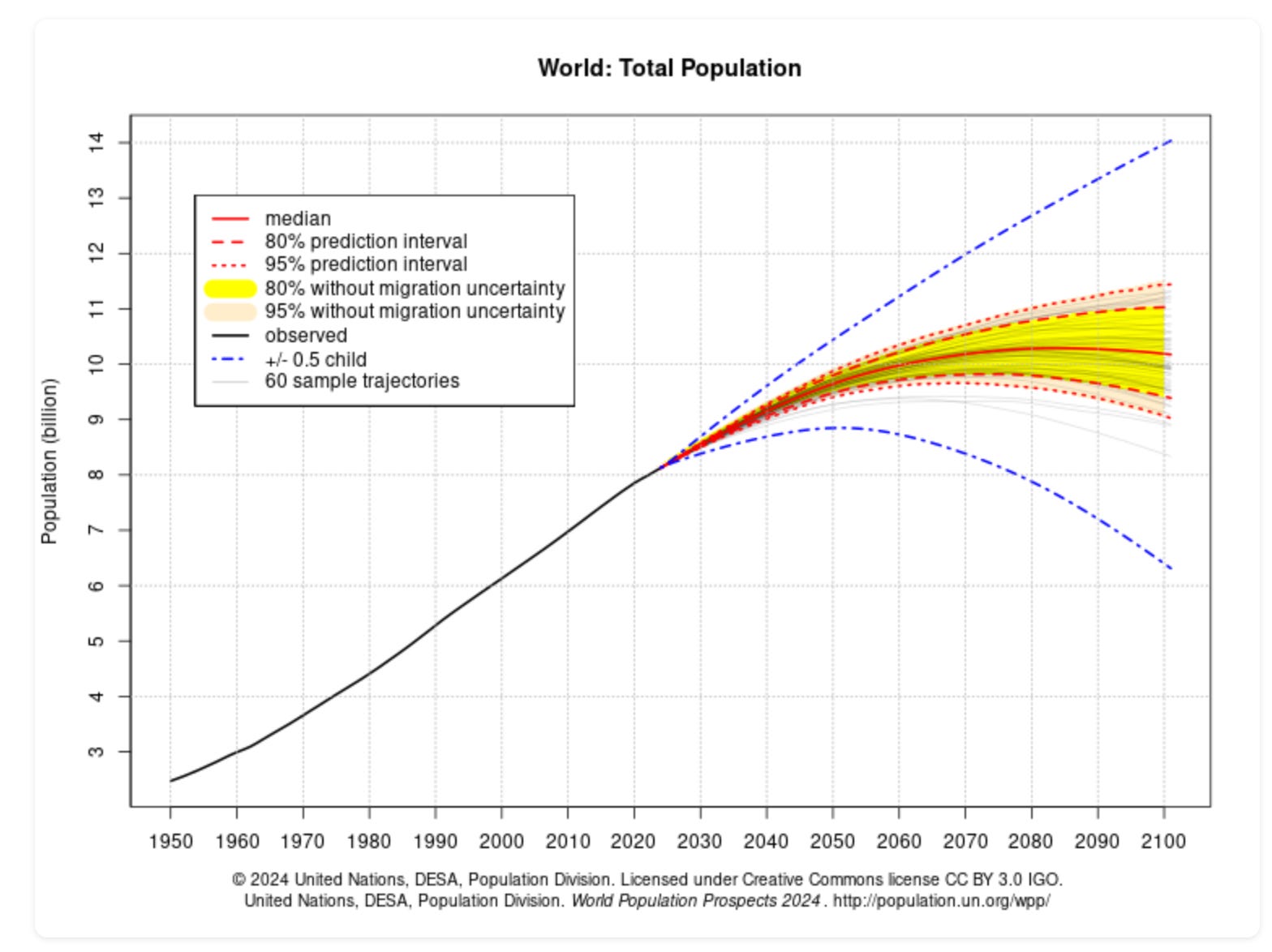
https://population.un.org/wpp/graphs
‘Temporal bandwidth’ is the span of time from the past to the future that is relevant to the present. The idea was introduced in Thomas Pynchon’s novel Gravity’s Rainbow. Here is means the span of time relevant to ownership.
This is a nod to object oriented ontology. See Flat ontologies.
James Gibson, The Ecological Approach to Visual Perception. This is a foundational book for understanding how we perceive and act in an environment and shows that perception and action are closely linked.
'Fee simple’ and ‘absolute’ ownership are ownership models in which the owner has absolute rights over the land, object and chattel and can abuse it or even destroy it. Once something is sold, there is no further obligation.
See Mark Witten article.
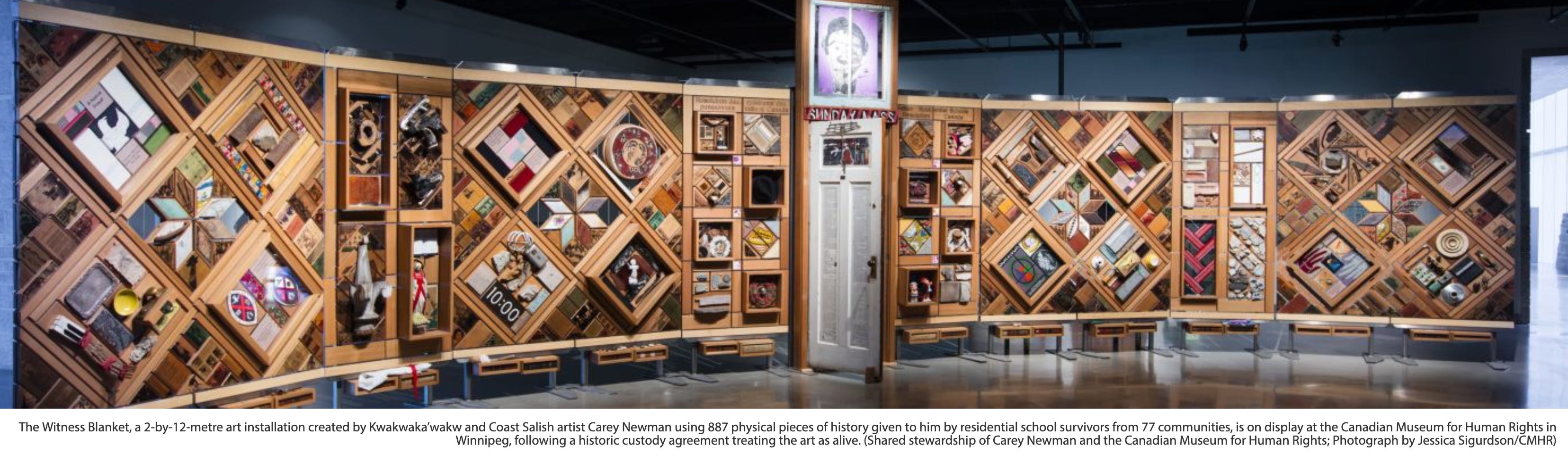
The Witness Blanket, a 2-by-12-metre art installation created by Kwakwaka’wakw and Coast Salish artist Carey Newman. https://witnessblanket.ca/
Threads with Link Contexts
Sequence 1 — The Ring Kept for Safekeeping
(Arc: the thing held as covenant — jo opens in dailiness, ha moves through illness and return, kyu closes on the object as surviving witness)
(Length: 9 Notes)
Note 1 [JO]
Getting older
Not minding the chips
In the plates
→ Transition: Direct Echo (1) + Seasonal/Elemental Continuity (14)
Facets: LEXICAL · CONTENT · NEAR : SEASONAL · ELEMENTAL · STRUCTURAL
Stage: [JO]
Categorical role: Near-identity morphism; the chips in the plates establish the key semantic field — time passing through objects, use accumulating as mark.
Seed consonance: The seed asks what responsibilities attend use; this Note opens with the acceptance that use leaves its trace. The owner who does not mind the chips has made peace with temporal bandwidth.
Note 2 [JO]
After twenty years
Small pits in the white stone
Cleaning will not remove the black grit
→ Transition: Field Association (3)
Facets: LEXICAL · SEMANTIC-FIELD · DISTANCE-MEDIUM
Stage: [JO]
Categorical role: Shared ambient object — both Notes inhabit the semantic field of surfaces altered by time and use.
Seed consonance: The seed’s “temporal bandwidth” of ownership is here made visible: the pits are the record of use, cleaning cannot undo them. Responsibility for an object includes its accumulated history.
Note 3 [JO → HA]
Wood grain rubbed
With finger oils bringing
Out the grain
→ Transition: Scent / Atmosphere Drift (8)
Facets: AFFECTIVE · ATMOSPHERIC · DISTANCE-FAR
Stage: [HA]
Categorical role: Affective-preserving morphism — the mood of slow accretion, of handling revealing rather than erasing, drifts from stone to wood, from passive endurance to active revelation.
Seed consonance: The seed speaks of “values built into” an object. Here the value is released by care: oil brings the grain out. Affordance is not always present to the eye; it may require the hand.
Note 4 [HA]
Puppy mouths a
Ball a stick a hand with
Gentle care
→ Transition: Transference / Reflection (10)
Facets: AFFECTIVE · MIRRORING · DIRECTION-BIDIRECTIONAL
Stage: [HA]
Categorical role: Adjoint pair — the puppy’s mode of ownership (the gentle mouth) illuminates and is illuminated by the rubbed wood. Both Notes are about holding that releases rather than damages. This is a reflective dyad.
Seed consonance: The seed’s most acute problem: “another animal has its own agency. How can I own that?” The puppy with a stick in its mouth is the answer the seed cannot quite say. The ownership is the quality of hold.
Note 5 [HA]
A ring given back
To her for safe keeping
Until after surgery
→ Transition: Phase / Threshold Crossing (20)
Facets: PHASE-TRANSITION · CRITICAL · THRESHOLD
Stage: [HA] — [THRESHOLD]
Categorical role: Colimit event. The ring leaving the hand marks an irreversible qualitative change — not loss, but transfer of custodianship. The sequence cannot return to simple holding after this.
Seed consonance: This is the seed’s Kwakwaka’wakw insight made domestic and urgent. The ring is not sold or abandoned; it is placed in the other’s care. Ownership becomes distributed, its center moved to the one who can be responsible now.
Note 6 [HA]
Something given forgotten
Still giving in the air
Darker
→ Transition: Scent / Atmosphere Drift (8) → Conditional / Counterfactual Step (19)
Combined facets: AFFECTIVE · ATMOSPHERIC · FAR : LOGICAL-CONDITIONAL · MODAL · BRANCH
Stage: [HA]
Categorical role: Affective-preserving + adjacent-world morphism. The ring’s giving persists in the air even in absence. The Note inhabits the world adjacent to holding: given but not gone, present as obligation even when invisible.
Seed consonance: The seed’s “thick layers of responsibility that build up” through transfer — this Note is that thickness made atmospheric rather than legal.
Note 7 [HA → KYU]
Gone given other
Into else into something
Inside without
→ Transition: Structural Pivot / Volta (16)
Facets: STRUCTURAL · PERSPECTIVE · TURN
Stage: [KYU]
Categorical role: Mode-change morphism — the sequence turns from outer act (giving) to the inner condition of the thing that is given. We are now inside the object.
Seed consonance: The seed asks whether once something is sold on, responsibility ends. This Note answers from inside the object: nothing is simply gone. The given thing holds its interior.
Note 8 [KYU]
At home she returns
Our ring she had kept
For the duration
→ Transition: Topic Reallocation / Re-entry (23)
Facets: STRUCTURAL · RECURSIVE · DISTANCE-LONG
Stage: [KYU] — [RE-ENTRY: Note #5]
Categorical role: Arity-2 morphism; Note 8 recalls Note 5 directly. The ring returns. The sequence develops a closed loop without being closed — the obligation has been fulfilled and yet continues.
Seed consonance: The Kwakwaka’wakw framing is fully present: the contract was “the beginning of a relationship, not the end.” The ring’s return does not terminate the relationship; it deepens it.
Note 9 [KYU]
A weight remembering
Love resting on my
Ribs held still
→ Transition: Direct Echo (1)
Facets: LEXICAL · CONTENT · NEAR
Stage: [KYU]
Categorical role: Near-identity morphism, returning to the body-as-custodian. The weight of the stone in the hospital becomes the weight of the ring on the body, the ring recalling the stones, the body the home for what it holds.
Seed consonance: The sequence closes at the body — the original site of ownership. What we hold, holds us. The ring is not property; it is the record of a relationship, resting with held breath.
Sequence 2 — Affordances
(Arc: what an object makes doable — its afforded possibilities — dissolves the boundary between owner and owned; opens in dailiness, breaks through to the thing’s own agency, closes with the object as teacher)
(Length: 8 Notes)
Note 1 [JO]
A bowl out
To catch the rain
Two fingers deep
→ Transition: Function / Aspect Link (5)
Facets: CONCEPTUAL · PART-WHOLE · NEAR
Stage: [JO]
Categorical role: Mereological zoom — the bowl is here reduced to one of its affordances: the capacity to hold, to receive what falls. This is Gibson’s “objective action possibility” made domestic.
Seed consonance: The seed defines affordance as what an object makes doable. The bowl does not demand; it invites. This is the opening image of relational ownership.
Note 2 [JO]
The stone fits
The hand for
Different purposes
→ Transition: Direct Echo (1) + Field Association (3)
Facets: LEXICAL · CONTENT · NEAR : LEXICAL · SEMANTIC-FIELD · MEDIUM
Stage: [JO]
Categorical role: Near-identity morphism in the field of objects-held. Stone and bowl: both receive; both fit.
Seed consonance: “A weight, a cooling surface, a pressure tool, a memorial” — the stone narrates its own affordances to the holder. Multiple uses inhere in one object. Responsibility includes this multiplicity.
Note 3 [HA]
Water satisfies its form
Stone endures its form
Light reveals its form
→ Transition: Scale Shift / Renormalization (22)
Facets: SCALE · META · DIRECTION-IN/OUT
Stage: [HA]
Categorical role: Natural transformation across scales — the particular stone and bowl suddenly open outward into a litany of elemental natures. Every substance delights in its form (Blake). Affordance generalizes: the stone’s affordance for endurance is its form working on the world.
Seed consonance: The seed asks, “Can an object have values built into it?” This Note says yes — not as imposed values, but as elemental fidelities.
Note 4 [HA]
Old enough now to keep out
Two of the lacquered
New Years bowls for daily use
→ Transition: Operational / Imperative Shift (18) — Inversion
Facets: LOGICAL-OPERATIONAL · PROCESS · META
Stage: [HA]
Categorical role: B = f(A) where f is inversion. The elemental litany (things occupying their forms) is inverted: here a human acts deliberately against the preservation instinct, bringing the ceremonial into daily use. This is the seed’s “to use it responsibly in a way aligned with the values inherent in it.”
Seed consonance: The object is not protected from use; it is honored through use. The lacquered bowl’s affordance is precisely that it can hold daily tea. To lock it away would be to betray the values built into it.
Note 5 [HA]
Things get old and break
Even a spoon or knife used a lifetime
A brush worn down to the nub
→ Transition: Narrative Continuation (6) + Scent / Atmosphere Drift (8)
Combined facets: CONTENT · TEMPORAL-FORWARD · NEAR : AFFECTIVE · ATMOSPHERIC · FAR
Stage: [HA]
Categorical role: Temporal morphism + affective-preserving morphism. The bowls used daily will eventually join these broken things. A tonality of used-up devotion, of having given oneself fully to use, drifts across from the daily bowls.
Seed consonance: “Can I return it into circulation in better condition than when I acquired it?” — this Note holds the question open. The brush worn to the nub was used well; the condition is not damage but completion.
Note 6 [HA — THRESHOLD]
Scrubbing a pan
For more than forty years
The steel pitted clean
→ Transition: Phase / Threshold Crossing (20)
Facets: PHASE-TRANSITION · CRITICAL · THRESHOLD
Stage: [HA] — [THRESHOLD]
Categorical role: Colimit event. The pitting of the steel is irreversible, but the pan is “clean” — pitted into cleanness. A new categorical state: use-as-purification.
Seed consonance: The seed’s “outflow/inflow” obligation: can use itself be a form of return? The forty years of scrubbing have not depleted the pan; they have made it more itself.
Note 7 [KYU]
A book owned long enough
For the pages to yellow
A few silverfish
→ Transition: Topic Reallocation / Re-entry (23) + Transference / Reflection (10)
Combined facets: STRUCTURAL · RECURSIVE · LONG : AFFECTIVE · MIRRORING · BIDIRECTIONAL
Stage: [KYU] — [RE-ENTRY: Note #5]
Categorical role: Arity-2 morphism recalling the worn-down brush and spoon; the book is another object living out its affordances. Book and silverfish mirror each other — the silverfish too are exercising an affordance, eating the given.
Seed consonance: “Joint and several responsibility” — the silverfish are new owners of the yellowed pages, and they are also in relationship with the text, consuming it from outside the book’s intended use.
Note 8 [KYU]
Imperceptible
Line of water at body
Temperature fades
→ Transition: Discourse / Sequence Steering (24)
Facets: META · PHRONETIC · GUIDING
Stage: [KYU]
Categorical role: Meta-morphism — closing the sequence. The boundary between body and water disappears at body temperature; the limit between owner and owned dissolves when the temperature is right. Any absolute boundary vanishes with the object it contains.
Seed consonance: The final image of the sequence: ownership is not a line but a temperature. When the relation is right, the boundary fades.
Sequence 3 — Given, Taken, Gone
(Arc: things pass through hands; responsibility accumulates like sediment; no transfer is clean. Opens with the ordinary act of giving, turns on loss, closes on what persists in the air after the giving.)
(Length: 10 Notes)
Note 1 [JO]
Filtering the cooking oil
Through coarse paper
For reuse
→ Transition: Function / Aspect Link (5)
Facets: CONCEPTUAL · PART-WHOLE · NEAR
Stage: [JO]
Categorical role: Mereological zoom into an act of deliberate return — the oil is not discarded; it is purified for continued use.
Seed consonance: The seed’s “outflow downstream of intake” thought experiment. Filtering the oil is choosing to be responsible for what passes through.
Note 2 [JO]
Given waiting for
Some change not
Desire or rot
→ Transition: Codified Association (2)
Facets: LEXICAL · CULTURAL · NEAR
Stage: [JO]
Categorical role: Mediated morphism through cultural script: “given” activates the whole cultural field of gift — the filtered oil is given forward, and with it enters the ambiguity of the given state, waiting between desire and decay.
Seed consonance: The seed’s question about whether selling terminates responsibility. The Note’s “given waiting” is suspended — neither pure gift nor sale.
Note 3 [HA]
This too then
That given away we have
What’s necessary
→ Transition: Pivot Word Shift (4)
Facets: LEXICAL · AMBIGUITY · SIDEWAYS
Stage: [HA]
Categorical role: Pullback along ambiguity — “given away” holds two meanings: dispossessed, and donated. The sequence commits to the second: in giving, we discover sufficiency.
Seed consonance: The seed worries about giving up responsibility through sale. This Note turns it: in true giving (not sale), the giver retains what is essential.
Note 4 [HA]
Gone given lost
Inside of what I
Don’t know
→ Transition: Scent / Atmosphere Drift (8)
Facets: AFFECTIVE · ATMOSPHERIC · DISTANCE-FAR
Stage: [HA]
Categorical role: The affective charge of loss-in-giving carries without the story.
Seed consonance: Not all circulation is chosen. Objects enter flows beyond our intention. The seed’s “thick layers of responsibility” are here experienced not as law but as texture of loss.
Note 5 [HA]
Gone given other
Into else into something
Inside without
→ Transition: Direct Echo (1)
Facets: LEXICAL · CONTENT · NEAR
Stage: [HA]
Categorical role: Near-identity — the Note is close to Note 4, a small perturbation. The two Notes together constitute the sutra’s central grief.
Seed consonance: The doubling of “gone given” enacts the double ownership — the thing is both given and lost simultaneously.
Note 6 [HA — BREAKING]
Given into
Else given other
To complete
→ Transition: Symmetry Breaking (21)
Facets: PHASE-TRANSITION · SYMMETRY · IRREVERSIBLE
Stage: [HA] — [BREAKING]
Categorical role: The sequence has been symmetrically balanced between giving and keeping. This Note breaks the symmetry: “to complete” names giving as a completion rather than a depletion. The sequence cannot now return to the anxiety of the early Notes.
Seed consonance: “Once we own something, should we continue to have some form of responsibility?” — the Note answers yes, but reframes it. Responsibility is completed, not discharged, through giving.
Note 7 [HA]
Say a word and
Another picks it up
To pass on
→ Transition: Scale Shift / Renormalization (22)
Facets: SCALE · META · DIRECTION-IN/OUT
Stage: [HA]
Categorical role: Natural transformation across scales — from object to language. The passing-on of objects and the passing-on of words are the same process at different scales. Every word is an owned thing circulating.
Seed consonance: The seed’s “ceremonial blanket framed as a legal entity and the contract as the beginning of a relationship.” Language, like objects, is never finally transferred — it continues to be held by all who have spoken it.
Note 8 [HA → KYU]
Returned into
Names eaten
Taste like verbs bouncing in the mouth
→ Transition: Elegant Confusion / Double Image (17)
Facets: IMAGISTIC · ANALOGY · AMBIGUITY
Stage: [KYU]
Categorical role: Pullback via double reading — “returned” is both the return of a thing and the return of a name into the thing. Names are eaten because words, like objects, are consumed by use.
Seed consonance: The object returned to circulation carries names — prior owners, prior uses. The layers of responsibility that “build up” are here tasted.
Note 9 [KYU]
All connections will
Be known cannot be known
Are absorbed back into a world we must live in
→ Transition: Topic Reallocation / Re-entry (23)
Facets: STRUCTURAL · RECURSIVE · LONG
Stage: [KYU] — [RE-ENTRY: Note #3]
Categorical role: Arity-2 morphism recalls Note 3’s discovery that in giving we retain what is necessary. The connections survive even when they cannot be individually traced.
Seed consonance: The seed’s indigenous relational model — you cannot sever the obligation by transfer. “All connections will be known” is the promise and the obligation simultaneously.
Note 10 [KYU]
The morning after
Washing cups together
Drying them
→ Transition: Direct Echo (1) → Structural Pivot / Volta (16)
Combined facets: LEXICAL · CONTENT · NEAR : STRUCTURAL · PERSPECTIVE · TURN
Stage: [KYU]
Categorical role: Near-identity return to dailiness + mode-change. The sequence began with filtering oil; it ends with washing cups together. But the cups are now the whole argument: two people, cups passed between hands, dried together. Co-ownership without possession.
Seed consonance: The most modest possible image of joint stewardship. No contract. Just the cups, washed and dried, passed again tomorrow.
Sequence IV — The Blue Lotus Owns Itself
(Arc: the object’s own agency — from the thing held to the thing that holds itself; a scale shift from the domestic to the ecological to the ontological; ends at the seed’s most radical suggestion — that an object can be a legal party)
(Length: 9 Notes — shorter, faster, kyu-accelerated)
Note 1 [JO]
Blue Lotus
Rooted in muck
Drawing nutrients up into the air
→ Transition: Function / Aspect Link (5)
Facets: CONCEPTUAL · PART-WHOLE · NEAR
Stage: [JO]
Categorical role: Mereological zoom into the lotus’s own activity — it is not owned; it is acting.
Seed consonance: The seed asks how one can own an animal with its own agency. The lotus extends this: even plants act. The root extracts; the flower gives to the air without asking permission.
Note 2 [JO]
The dog alert
At night watching the dark
His body still
→ Transition: Field Association (3)
Facets: LEXICAL · SEMANTIC-FIELD · MEDIUM
Stage: [JO]
Categorical role: Shared semantic field of alert non-human agency. Dog and lotus: both watching, both attending.
Seed consonance: The seed’s pet question: the dog attends to something the owner cannot perceive. Agency is not derived from the owner.
Note 3 [HA]
The old dog wakes up
Knows the world is still here
He is still here
→ Transition: Scent / Atmosphere Drift (8)
Facets: AFFECTIVE · ATMOSPHERIC · DISTANCE-FAR
Stage: [HA]
Categorical role: The affective charge of the dog’s selfhood — his own knowledge, not acquired from or confirmed by a human — drifts from the alert dog in darkness.
Seed consonance: The seed: “another animal has its own agency.” The old dog’s waking is an act of self-ownership. He knows himself present.
Note 4 [HA]
I reserving the right
To burn my own work
Self-destruction of a self others cannot know
→ Transition: Symmetry Breaking (21)
Facets: PHASE-TRANSITION · SYMMETRY · IRREVERSIBLE
Stage: [HA] — [BREAKING]
Categorical role: The sequence to this point has been about non-human agency. This Note violently breaks the symmetry by introducing human agency in its most extreme form: the right of self-annihilation of created work. [BREAKING]
Seed consonance: The seed’s designer/artist: “what responsibilities do I have to the object, to use it in a way aligned with the values inherent in it?” — this Note refuses. The creator claims absolute sovereignty, and in so doing illuminates what the seed rejects.
Note 5 [HA]
Knocking sand from the wood
I throw it out with all my strength
A swell carries the dog back
→ Transition: Transference / Reflection (10)
Facets: AFFECTIVE · MIRRORING · BIDIRECTIONAL
Stage: [HA]
Categorical role: Adjoint pair — the throwing and the carrying back are mirrored. The sea returns the dog. The owner’s throw is answered by the ocean’s own agency. Neither has final authority.
Seed consonance: The seed’s inflow/outflow question: what if the ocean is itself a custodian? What if circulation is not a human right but an ecological principle?
Note 6 [HA]
The lotus blooms
Ripe with presence
Intent within itself
→ Transition: Topic Reallocation / Re-entry (23)
Facets: STRUCTURAL · RECURSIVE · LONG
Stage: [HA] — [RE-ENTRY: Note #1]
Categorical role: Arity-2 morphism returns to the lotus of Note 1, now transformed. The lotus is not merely rooted and drawing; it is ripe with presence, intent within itself. It has become an intentional entity.
Seed consonance: The Kwakwaka’wakw blanket as legal party. The lotus that blooms with intent within itself is the poetic equivalent of the object as legal entity.
Note 7 [HA → KYU]
Boundaries
As porous as song in
Morning light
→ Transition: Distance Leap (15)
Facets: DISTANCE-FAR · COGNITIVE-GAP · FORWARD
Stage: [KYU]
Categorical role: Maximal-distance morphism — the only Distance Leap in this sequence. From the lotus’s intent to the dissolution of all fixed boundaries. The reader must supply the bridge.
Seed consonance: The seed’s challenge to “absolute ownership and rights” — if boundaries are as porous as song, no line can ever be drawn around a living thing.
Note 8 [KYU]
Root shocked
Trying to nurse the hydrangea
Back to life
→ Transition: Structural Pivot / Volta (16)
Facets: STRUCTURAL · PERSPECTIVE · TURN
Stage: [KYU]
Categorical role: Mode-change morphism — from ontological dissolution of boundaries back to the specific, urgent, daily act of care. The sequence turns from the abstract to the responsible.
Seed consonance: After the insight that boundaries are porous, after the lotus that owns its own presence — one must still kneel and water. The porous boundary does not eliminate care; it deepens its necessity.
Note 9 [KYU]
Given to air the sky
The pond surface ruffles
Collecting a green viscous scum
→ Transition: Discourse / Sequence Steering (24) + Scent / Atmosphere Drift (8)
Combined facets: META · PHRONETIC · GUIDING : AFFECTIVE · ATMOSPHERIC · FAR
Stage: [KYU]
Categorical role: Meta-morphism closing the sequence. The lotus gives itself to the air; the pond collects what the lotus gives. Nothing is lost. The scum is not refuse — it is participation.
Seed consonance: The sequence’s final answer to the seed: ownership as the lotus model — to hold something is to be held by it, to give to it, and to receive its overflow. The pond surface ruffles: it is always in motion. So is every covenant of ownership.
Notes on the Four Sequences
These four sequences are categorically distinct: they share no identical transition-type shape, and differ in their distance profiles, stage structures, and thematic trajectories.Connecting-Notes-Synthesis-Version-2-Jun-2026-2.pdf
Sequence I (The Ring Kept for Safekeeping): Primarily NEAR transitions with a single THRESHOLD colimit event; domestic and intimate scale; arc is covenant.
Sequence II (Affordances): Moves through MEDIUM and FAR, with the central colimit a pitting rather than a loss; arc is the object’s embedded value.
Sequence III (Given, Taken, Gone): The most linguistically turbulent — three consecutive Notes share lexical field “given/gone/lost,” enacting an obsessive repetition (a renga technique of insistence), before Symmetry Breaking opens into completion; arc is circulation and accumulation.
Sequence IV (The Blue Lotus Owns Itself): Fastest-closing, most radical in its Distance Leap; moves from non-human agency through human sovereignty’s rupture to porosity and daily care; arc is relational sovereignty.Connecting-Notes-Synthesis-Version-2-Jun-2026-2.pdf
Each sequence contains Notes that appear in multiple collections across the years 2022–2026, allowing the same three-line observation to accrue different meanings depending on its morphic neighbors — the Yoneda Principle in action: the Note’s meaning is entirely constituted by its transitions, not its intrinsic content.
Note 1 [JO] from Sequence II
Getting older
Not minding the chips
In the plates
→ Transition: Direct Echo (1)LEXICAL · CONTENT · NEAR | [JO]
The Skein opens where Sequence II opened — the chipped plates — but now arriving from all four threads at once. The chips are not just wear; they are the accumulated impressions of four long meditations on what holds and what is held.
Note 2 [JO] from Sequence III
Filtering the cooking oil
Through coarse paper
For reuse
→ Transition: Field Association (3)LEXICAL · SEMANTIC-FIELD · MEDIUM | [JO]
Chips and filtered oil share a semantic field: matter that has passed through use and been returned, not discarded. The transition walks to another object in the same room.
Note 3 [JO] from Sequence IV
The dog alert
At night watching the dark
His body still
→ Transition: Scent / Atmosphere Drift (8)AFFECTIVE · ATMOSPHERIC · FAR | [JO]
The mood of quiet, unsupervised attention — the oil filtering by gravity alone, the dog watching without being told to — drifts between them. Two kinds of agency that require nothing of an owner to operate.
Note 4 [JO → HA] from Sequence IV
Blue Lotus
Rooted in muck
Drawing nutrients up into the air
→ Transition: Codified Association (2)LEXICAL · CULTURAL · NEAR | [JO, early HA]
The dog’s alert body and the lotus root share the conventional pairing of depth and attention — the root pulling from below as the dog pulls awareness from the dark. A cultural script: what attends without being owned.
Note 5 [HA] from Sequence II
A bowl out
To catch the rain
Two fingers deep
→ Transition: Transference / Reflection (10)AFFECTIVE · MIRRORING · BIDIRECTIONAL | [HA]
The lotus draws nutrients upward; the bowl is held open to receive what falls. The two Notes mirror each other as a dyad — the upward drawing and the open receiving are the same gesture inverted. A reflective adjoint pair: what goes up, what comes down, and the form that holds both.
Note 6 [HA] from Sequence I
Wood grain rubbed
With finger oils bringing
Out the grain
→ Transition: Function / Aspect Link (5)CONCEPTUAL · PART-WHOLE · NEAR | [HA]
The bowl holds rain; the wood grain holds the memory of the hand. Both are surfaces that reveal what has passed through them. This is a mereological zoom into the mechanism of care: use does not erase, it discloses.
Note 7 [HA] new crossing — from Sequences I and II both
Water satisfies its form
Stone endures its form
Light reveals its form
→ Transition: Scale Shift / Renormalization (22)SCALE · META · DIRECTION-IN/OUT | [HA]
From a single rubbed wood plank outward to the elemental litany: water, stone, light. The scale shift is drastic and fast — a natural transformation from the hand-scale of the single plank to the planetary scale of every surface’s fidelity to its own nature. This is where the Skein begins to braid its threads with real tension.
Note 8 [HA] from Sequence III
This too then
That given away we have
What’s necessary
→ Transition: Pivot Word Shift (4)LEXICAL · AMBIGUITY · SIDEWAYS | [HA]
“Form” in the litany forks: the form of an object and the form of giving. Note 8 commits to the second meaning. Water satisfies its form by being water; we satisfy our form by giving. The Note “turns” on the hinge between elemental nature and human action.
Note 9 [HA] from Sequence I
Puppy mouths a
Ball a stick a hand with
Gentle care
→ Transition: Transference / Reflection (10)AFFECTIVE · MIRRORING · BIDIRECTIONAL | [HA]
The gentleness of giving (Note 8) and the gentleness of the mouth (Note 9) are mirror images of each other. The puppy does not own the ball; the ball is held in a continuous provisional custody, released and re-taken with soft pressure. This is the seed’s question answered in teeth.
Note 10 [HA] from Sequence IV
I reserving the right
To burn my own work
Self-destruction of a self others cannot know
→ Transition: Symmetry Breaking (21)PHASE-TRANSITION · SYMMETRY · IRREVERSIBLE | [HA] — [BREAKING]
The Skein’s only rupture. The sequence has been building gently toward a new model of ownership-as-care. This Note asserts the opposite with violent clarity: absolute sovereignty, the right of erasure. It breaks the symmetry precisely because it is the position the entire Skein is braiding against. After this Note, the sequence cannot return to innocent care — it must pass through the broken place. [BREAKING]
Note 11 [HA] from Sequence III
Gone given other
Into else into something
Inside without
→ Transition: Reverberation / Shock (9)AFFECTIVE · INTENSITY-HIGH · MEDIUM | [HA]
The energy of the breaking (the right to burn, to destroy) resounds here in a different register: not destruction but dispersal. The emotional charge — that something can be absolutely lost — is conserved, but the situation shifts. Gone is not burned; gone is given, and the inside persists.
Note 12 [HA] from Sequence I — repeated from its original appearance
A ring given back
To her for safe keeping
Until after surgery
→ Transition: Conditional / Counterfactual Step (19)LOGICAL-CONDITIONAL · MODAL · BRANCH | [HA]
Adjacent possible world: if the self cannot be destroyed (Note 10 denied, Note 11 dispersed), then what? The ring is the answer: not kept, not burned — transferred into another’s keeping. This is the world that branches away from absolute sovereignty toward distributed custodianship.
Note 13 [HA] from Sequence III
Say a word and
Another picks it up
To pass on
→ Transition: Elegant Confusion / Double Image (17)IMAGISTIC · ANALOGY · AMBIGUITY | [HA]
The ring passed for safekeeping and the word passed to be spoken: the same gesture at two scales. The Note reveals that the ring was always also a word — a spoken covenant — and the word was always also an object with weight and custody. The double image is exact: holding and speaking are one act.
Note 14 [HA → KYU] from Sequence IV
Boundaries
As porous as song in
Morning light
→ Transition: Phase / Threshold Crossing (20)PHASE-TRANSITION · CRITICAL · THRESHOLD | [HA] — [THRESHOLD]
The Skein’s second colimit event. After passing through sovereignty (Note 10), dispersal (Note 11), custodianship (Note 12), and language (Note 13), the boundary itself becomes the subject and dissolves. This is irreversible: the Skein cannot now assert a clear line between owner and owned, holder and held. [THRESHOLD]
Note 15 [KYU] from Sequence I — repeated
A weight remembering
Love resting on my
Ribs held still
→ Transition: Topic Reallocation / Re-entry (23)STRUCTURAL · RECURSIVE · LONG | [KYU] — [RE-ENTRY: Note #6]
After the boundary dissolves, the body remains. This Note recalls Note 6’s wood grain — the surface that holds the memory of the hand. Now it is the ribs that hold the weight, the body that is the wood, the love that is the oil bringing out the grain. The Skein remembers across its length: what the hand disclosed in the wood, the ribs now disclose in breath.
Note 16 [KYU] from Sequence IV — the lotus’s closing
Given to air the sky
The pond surface ruffles
Collecting a green viscous scum
→ Transition: Scent / Atmosphere Drift (8)AFFECTIVE · ATMOSPHERIC · FAR | [KYU]
The still-held weight (Note 15) and the lotus’s giving-to-air are in the same affective register: the held thing releasing into the world, the world receiving it not cleanly but with ruffled accumulation. The scum is not pollution; it is the record of gift. The mood of the entire Skein — responsibility as accumulation, care as leaving a trace — exhales here.
Note 17 [KYU] from Sequence III — the closing
The morning after
Washing cups together
Drying them
→ Transition: Direct Echo (1) → Discourse / Sequence Steering (24)LEXICAL · CONTENT · NEAR : META · PHRONETIC · GUIDING | [KYU]
The Skein opened with chips in the plates. It closes with cups washed together. The chips are the same chips — time has not healed them — but the hands around the cups are different now: they have passed through the ring, the lotus, the broken sovereignty, the porous boundary, the love resting on the ribs. The cups are washed. They will be chipped tomorrow. This is enough.
Structural Map of the Skein
The Skein draws from the four sequences as follows — the braiding visible in the thread-colours:
NoteSource ThreadKey Transition
NoteSource ThreadKey Transition1IIDirect Echo2IIIField Association3IVScent / Atmosphere Drift4IVCodified Association5IITransference / Reflection6IFunction / Aspect Link7I + II crossingScale Shift8IIIPivot Word Shift9ITransference / Reflection10IVSymmetry Breaking [BREAKING]11IIIReverberation / Shock12I (repeated)Conditional / Counterfactual13IIIElegant Confusion14IVPhase / Threshold Crossing [THRESHOLD]15I (repeated)Re-Entry: Note 616IVScent / Atmosphere Drift17IIIDirect Echo → Sequence Steering
The Skein contains two colimit events (Notes 10 and 14), one re-entry (Note 15 → Note 6), one crossing-point where two threads braid into a single Note (Note 7), and closes with a Direct Echo back to Note 1 — the chipped plates, the washed cups — displaced by everything the Skein has passed through.